
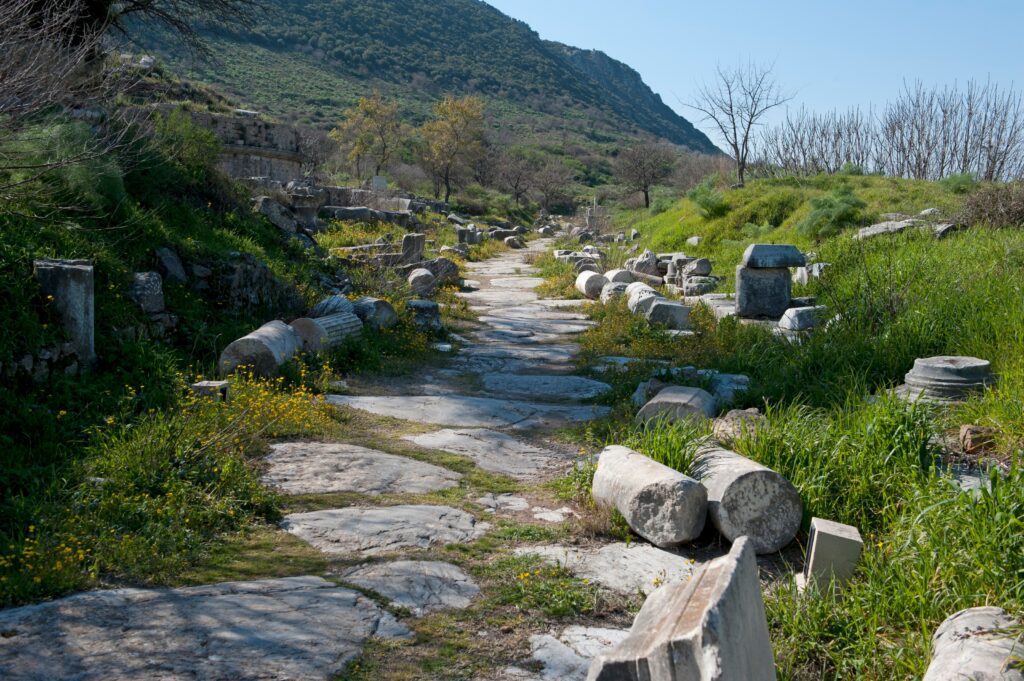
The East Gymnasium of Ephesus is a large Roman bath and exercise complex next to the Magnesian Gate, at the Upper Gate end of the city. It was built in the 2nd century AD, and it is one of the four bath-gymnasiums of Ephesus. Only part of it has been excavated.
Add Tours Around Turkey as a preferred source on Google
Ephesus hosts a big variety of buildings, and the first big ruin of the walk is one of the least known. Most tours start at the Upper Gate, so let’s have a look at the East Gymnasium before we go down the hill. If you are not sure which gate to use, read my article on the Upper Gate or the Lower Gate.
What Was a Bath-Gymnasium?
A bath-gymnasium joined a Greek gymnasium, the place for training and school, with Roman baths under one roof. By the way, the Greek word gymnos means naked, because young men trained without clothes, and our word gymnasium comes from there.
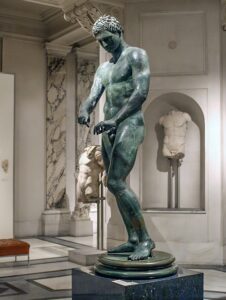
In the cities of Asia Minor this type was not just a place for sport also a social center. There was a courtyard for exercise, hot and cold bath rooms, lecture halls and a room for the Emperor cult. Ephesus had four of them: the Harbor Gymnasium, the Theater Gymnasium, the Vedius Gymnasium in the north and the East Gymnasium. You can read about daily life in the baths in my article on city life in Ephesus, and about schools in my article on education and literacy in ancient times.
What Did the East Gymnasium Look Like?
The complex had two main parts: a bath block and an exercise courtyard, which is called a palaestra. Bath block is older and belongs to the first half of the 2nd century AD. The courtyard was rebuilt in the second half of the century, and it became small, only about 25 by 30 meters.
The complex had these parts:
- Bath rooms in the middle, with vaulted halls on three sides for exercise
- A courtyard with columns, the palaestra
- A hall for the emperor cult
- A lecture hall, called an auditorium
- Mosaic floors in some of the halls
Who Paid for the East Gymnasium?
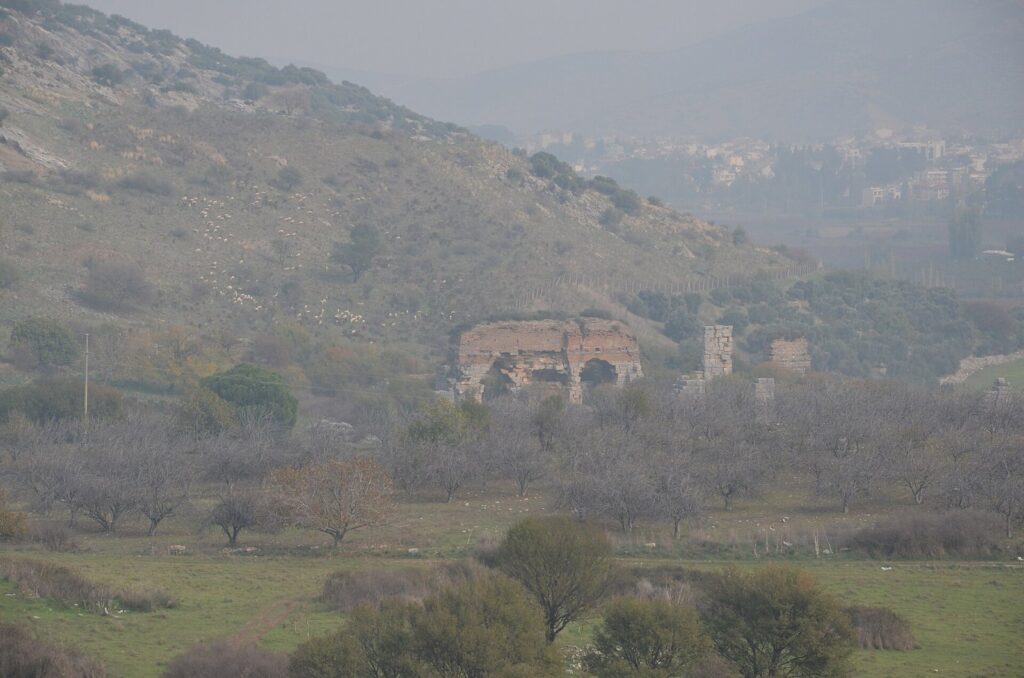
Probably the sophist Flavius Damianus and his wife Vedia Phaedrina, but nobody can prove it. A sophist was a rich public speaker and teacher, and Damianus was a well-known one in Ephesus. Vedia Phaedrina belonged to the Vedii, the rich family that also built the Vedius Gymnasium in the north of the city.
A statue thought to show Damianus as a priest of the emperor cult was found in the building in 1930, and today it is in the İzmir Archaeological Museum. The donor inscription is broken, nobody can be sure about the names. That is why I say “probably”.
Seeing the East Gymnasium Today
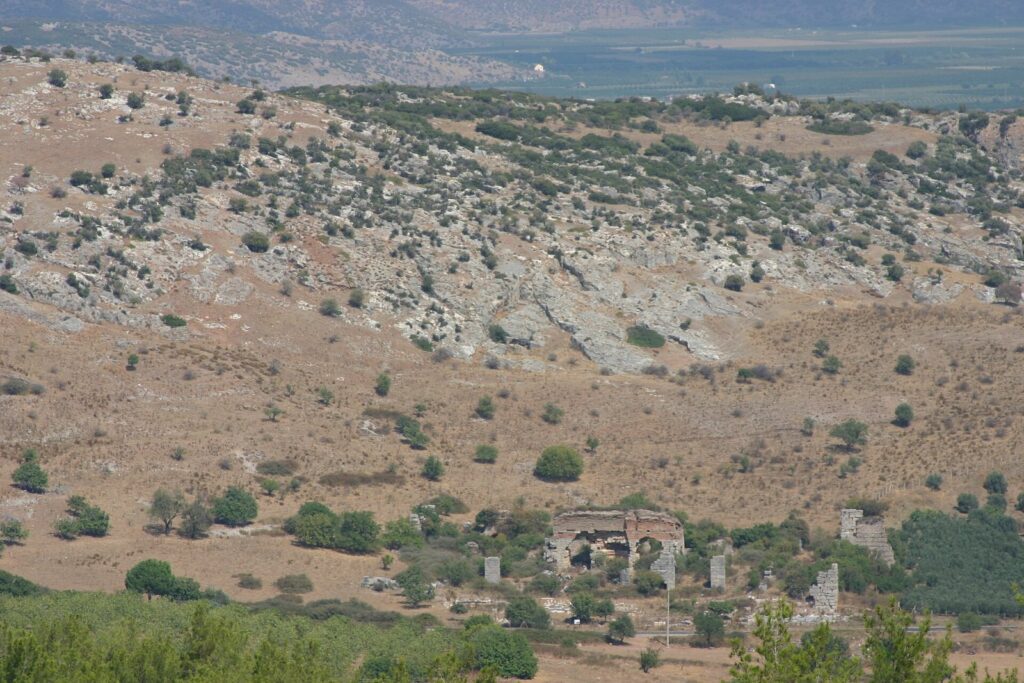
Only part of the East Gymnasium has been excavated, and it is fenced, so you look at it over the fence from the roadside. It stands beside the Magnesian Gate, and my article on the Magnesia Gate of Ephesus tells the story of the gate.
After the East Gymnasium come the Varius Baths and the State Agora, and then the long walk down Curetes Street.
Frequently Asked Questions
How many gymnasiums were there in Ephesus?
Ephesus had four big bath-gymnasiums: the Harbor, the Theater, the Vedius and the East Gymnasium. The first two stand along the Arcadian Road, the Vedius Gymnasium is in the north, and the East Gymnasium is at the Magnesian Gate.
Can you visit the East Gymnasium in Ephesus?
You can see it from the roadside near the Upper Gate, but it is fenced and only partly excavated, so you cannot walk inside.
Was the East Gymnasium only for sports?
No. It was baths, school and meeting place in one. When the courtyard was rebuilt it became small and a lecture hall was added, so learning mattered as much as sport.
Hire Ephesus Tour Guide
I’m a nationally licensed Turkish tour guide based in Kuşadası, nearby Ephesus. My day guiding is in Ephesus, İzmir and Pamukkale. I start most Ephesus walks at the Upper Gate, and I tell my guests the stories of the ruins we pass on the way down.
You can see my guiding rates and guiding areas, or write to me through my contact page to ask about my availability.
I hope we will start from the Upper Gate together one day. You can always write to me with your questions about the ruins of Ephesus. See you soon, Hasan Gülday.


1 comment