124 articles by a licensed guide

Ancient Cities & History

The ancient cities of Turkey go far beyond Ephesus — this country holds more Greek and Roman ruins than Greece and Italy combined, and in this category I share the history of the sites I have spent my career studying and guiding. As a nationally licensed Turkish tour guide, I trained in the archaeology, mythology and history of all of Anatolia, and these articles are where I put that training to work for you.

Ephesus

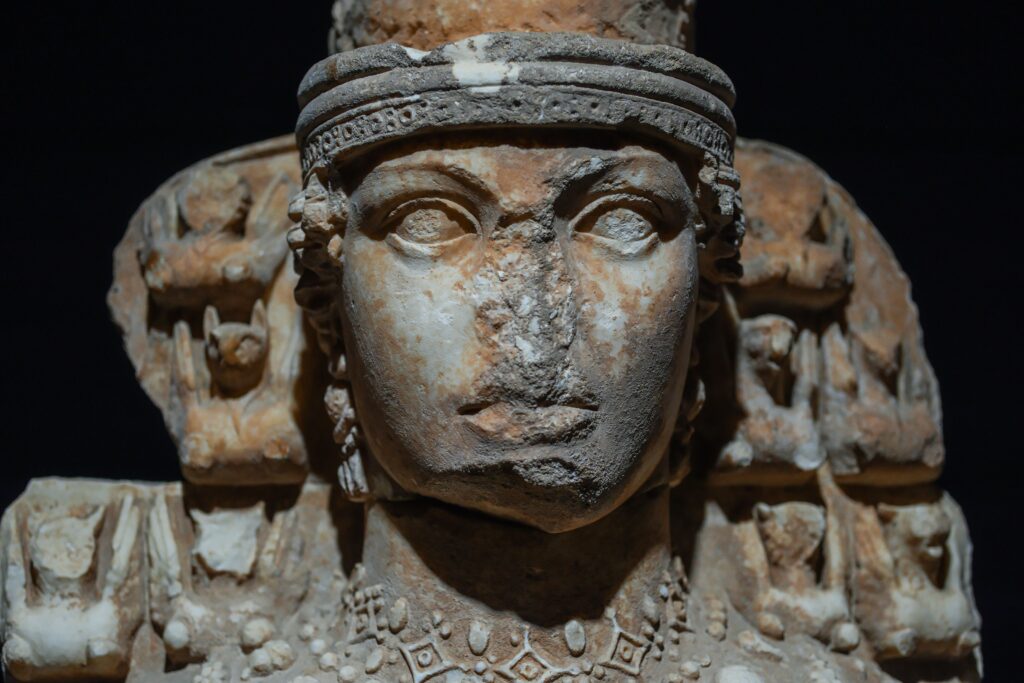
Who Were the Priests of Artemis of Ephesus?

The priests of Artemis at Ephesus were led by a high priest called the Megabyzos, with Essenes and virgin priestesses beside him. Persian traces in the cult, the priestesses of Roman times and Aristarche, who took Artemis to Marseille.

7 min read

Ephesus

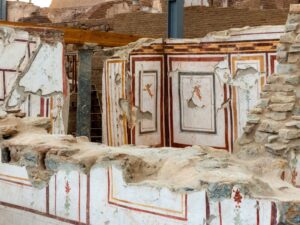
Who Lived in the Terrace Houses of Ephesus?

Who lived in the Terrace Houses of Ephesus? Rich families, among them the Dionysus priest Furius Aptus, and what their homes had: marble halls, household shrines, running water, costly red paint and glass windows.

6 min read

Ephesus

Belevi Mausoleum: The Huge Hellenistic Tomb Near Selçuk

The Belevi Mausoleum is a huge Hellenistic tomb about 14 kilometers from Selçuk, the second largest in Anatolia after Halicarnassus. Who was probably buried in it, what it looked like, the Belevi Tumulus nearby, and how to see it today.

5 min read

Cicero

Cicero, Roman orator, Roman Republic, governor of Cilicia, Mark Antony, Roman law, Cicero, Marcus Tullius Cicero, Roman orator, Roman Republic, governor of Cilicia, Cilicia, Mark Antony, Catiline, Roman law, philosophy, rhetoric, ancient Rome, Roman history, Turkey

4 min read

Ephesus

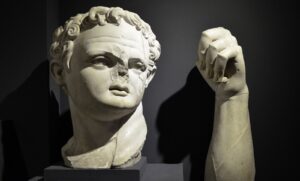
Temple of Domitian in Ephesus and Why the City Was Called Neokoros

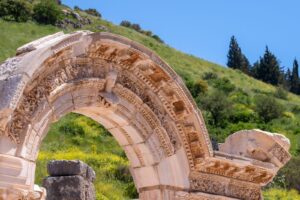
The Temple of Domitian in Ephesus, also called the Temple of the Sebastoi, made Ephesus neokoros, the temple warden of the emperors. Its vaulted terrace, the colossal head in the Ephesus Museum, the stones recut after Domitian's murder and how it differs from the Temple of Hadrian, from a licensed guide in Ephesus.

13 min read

Ottoman Empire And The First World War

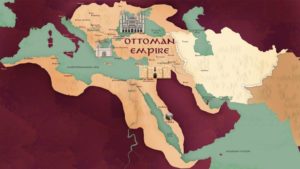
The Ottoman Empire entered World War 1 in October 1914 as one of the Central Powers. Read about its fronts, the Gallipoli victory and how the war ended.

5 min read

Gordion Ancient City in Turkey

Gordion was the capital of ancient Phrygia, near Ankara, and the home of the Midas Mound and the Gordian knot. It joined the UNESCO World Heritage List in 2023.

3 min read

2300-year-old Mini-heart Found in Troy

A three-centimeter clay mini pottery, about 2,300 years old, was found in the ancient city of Troy in Turkey. It was probably a votive offering.

3 min read

Epictetus of Hierapolis

Epictetus was a Stoic philosopher born a slave in Hierapolis, now Pamukkale. Read about his life, his main idea and some of his best known sayings.
3 min read

Surgery in Ancient Turkey

Surgery in ancient Turkey was done by Greek and Roman doctors with bone drills, forceps and hot irons. Read how the craft grew and where to see it today.

4 min read

World’s Oldest Emoji was Discovered in Turkey

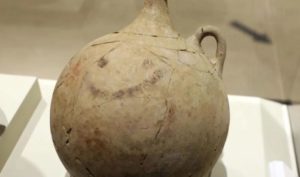
The “smile” emoji on the 3,700 years old jug, which was unearthed by the Turkish – Italian team of archeologists in Karkamış, one of the most important ancient…

1 min read

Manisa City of Princes

Manisa is the ‘City of Princes’, where the sultans, who were the sons of the Ottoman emperor, spent their princely period. Manisa is an important historical and cultural…

2 min read

Galen the Greatest Doctor of Antiquity

Cassius Claudii Galenos or more commonly known as Galen was born in the year 130 in the City of Pergamon (Modern Bergama of today’s Turkey). His father Nikon…

3 min read

Pergamon Ancient City

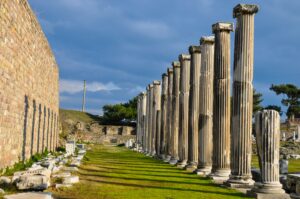
Pergamon was the capital of the Pergamon kingdom and stands above the town of Bergama near Izmir. UNESCO listed Pergamon in 2014.

12 min read

Hecate the Virtuous and the Sinful

Hecate was an ancient goddess of crossroads, torches and the moon, probably Carian in origin, and later linked with the dead and witchcraft.

4 min read

Education and Literacy in Ancient Times

Who went to school in ancient times, what children learned, and how books, papyrus and libraries worked in Greek and Roman cities, with examples from Anatolia.

4 min read

10 Ancient Philosophers of Anatolia

The ancient philosophers of Anatolia in this post are Thales, Anaximander, Anaxagoras, Xenophanes, Heraclitus, Aristotle, Diogenes, Strabo, Galen and Epictetus. They lived from about 600 BC to about…

7 min read

Slavery in Anatolia During Antiquity

In the 5th and 4th centuries B.C., the Anatolian economy was in very good condition and was experiencing its golden age in almost every field. With the victory…

7 min read

Zerzevan Castle and Mithras Temple

Zerzevan Castle, which was built by the Eastern Roman Empire (Byzantine Empire) as a military base on the ancient trade route between Diyarbakır and Mardin, and which was…

6 min read

Archeological Discoveries Made in Turkey in 2021

2021 was the year of easing restrictions of the Covid outbreak and archeological teams all around Turkey started to make it back to the excavations in various parts…

2 min read

Hercules in Turkey

Hercules, one of the most well-known characters of Greek and Roman mythology, who is also known as Heracles has settled in cultures all over the world as a…

8 min read

Differences Between Greek and Roman Theaters

Greek vs Roman theater: Greek seats lean on a hillside, Roman seats stand on vaults. See how to tell them apart at Priene, Miletus, Ephesus and Aspendos.

7 min read

Gaius Julius Caesar

Julius Caesar was a Roman general, writer and dictator. Read about his reforms, his death on March 15, 44 BC and his victory at Zela in Turkey, where he is said to have written Veni, vidi, vici.

7 min read

Roman Empire

Et tu, Brute? (You too, Brutus?) Roman Emperor Caesar Founded in the 1st century B.C. under the leadership of Augustus, the Roman Empire ruled in the Mediterranean and…

5 min read

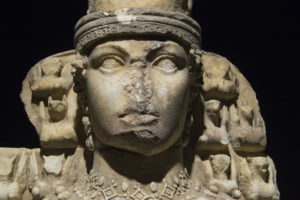
What Happened to Ancient Sculptures Noses?

Most ancient sculptures lost their noses by accident, because the nose sticks out and breaks first, but a few were damaged on purpose, as statues in the Ephesus Archeological Museum show.

3 min read

8 Stunning Archeological Structures from Turkey

I have previously published two lists featuring some great archeological structures from Turkey and received a great reaction from my visitors. I now publish the third article on…

4 min read

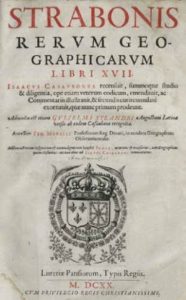
Strabo and Geographica

Early Life of Strabo Strabo was a Greek historian, geographer and philosopher of the Roman period in Anatolia. Strabo, born in Amasya (called Amaseia during the Roman Era)…

3 min read

Hierapolis Ancient City

History of Hierapolis Ancient City Hierapolis Ancient City was founded in the second century BC by the king of the Pergamon Empire, Eumenes the Second. According to ancient…

14 min read

7 Breath Taking Byzantine Attractions in Turkey

The wide geography of the Byzantine Empire (Today’s Anatolia and Asia Minor) which included different cultures and its cultural structure shaped by the acceptance of Christianity as the…

3 min read

Plants the Roman Empire Gifted to Asia Minor

Fennel, mulberry, greater celandine, ground elder and boxwood are five plants the Roman Empire gifted to Asia Minor, and all of them still grow in Turkey today.

3 min read

World’s Oldest Bridge in Use in Turkey

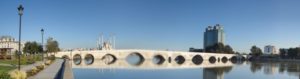
The Stone Bridge, which hosts 6 different civilizations in Adana and is known as the oldest bridge still in use in the world, stands with its glory like…

1 min read

The World’s Oldest Known Love Poem

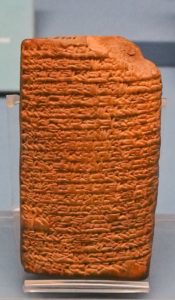
There is a cuneiform tablet numbered 2461 in the Old Oriental Works section of the Istanbul Archaeological Museum. This tablet is the world’s oldest known love poem belonging…

1 min read

8 Unmissable Archeological Attractions in Turkey

There are thousands of breathtaking attractions in Turkey when it comes to interests of archeology and history. I made a list for you featuring ”8 Unmissable Archeological Attractions…

4 min read

More about Ancient Cities & History

You will find posts here on the great classical cities of the Aegean coast: Priene, the little mountainside town with the most perfect Hellenistic street grid you will ever see; Miletus, home of the first philosophers; and Didyma, where the colossal Temple of Apollo still makes visitors gasp. I write about Aphrodisias and its sculpture school, about Pergamon and its steep theatre, and about the layers of civilisations — Hittite, Lydian, Persian, Greek, Roman, Byzantine, Seljuk, Ottoman — that make Anatolian history so wonderfully complicated.

My aim in every article is the same as my aim when I guide: to turn a field of broken columns into a living place. Who walked this street? What did they argue about in this agora? Why did this harbour silt up and this city die? When you know the answers, ruins stop being scenery and become stories.
Many of these sites sit within easy reach of Kuşadası and İzmir, which makes them perfect day trips, and several combine beautifully with Ephesus in a single day of guiding. Read the articles, choose the places that speak to you, and if you would like to explore any of these ancient cities with a licensed guide who genuinely loves them, I would be delighted to accompany you — get in touch and we will plan your day together.

*(~295 words)*