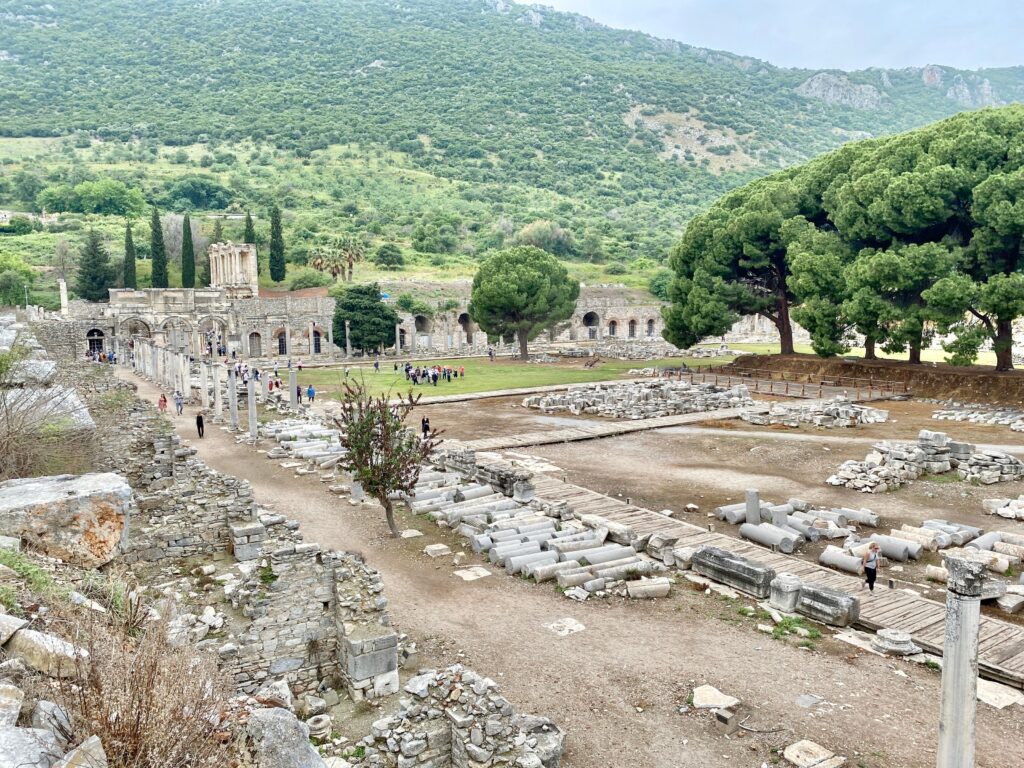
An ancient Greek or Roman city was made of a few standard structures: walls, an acropolis on the hill, an agora for trade and meetings, a theater, a gymnasium, baths and fountains. Structures in ancient cities like these are still easy to see at Ephesus, Priene and Pergamon.
Add Tours Around Turkey as a preferred source on Google
This is a classic question in tours, ”What are the structures that make up an ancient city?”. I love to speak about life in ancient times when I guide my groups. You will see nearly all of the mentioned structures in tours around Ephesus, Miletus, Pergamon, and many other ancient cities in Turkey. I hope one day we will explore even more together. You can always write to me if you have any questions about the structures which make up an ancient city. Also, you can book a private licensed tour guide in Turkey to learn more. My contact details are listed on the contact page. See you soon, Hasan Gülday
Main Structures of an Ancient City
Archaeological guide to Ephesus Ancient City and nearby ruins
- City Walls: Strong walls built around the settlement providing protection against external attacks
- Acropolis: Upper city where elite and royal members of the society used to live.
- Stoa: The column string that determines the boundaries of the agora and the structures consisting of the rooms behind it. Its modern counterpart in architecture is “portico”.
- Macellum: Meat and fish market in Agora.
- Bouleuterion: Council building.
- Odeon: A little theater, concert hall which is only for elite people. Bouleuterion and Odeon’s biggest difference is Bouleuterion is covered but Odeon is not.
- Prytaneion: The altar where the holy fire burns. Priestesses known as “Kureetes” were responsible for the constant burning of this fire in these buildings. Prytaneions are the buildings where important guests of the city are hosted.
- Theater: They are open-top, stepped structures designed for stage shows. The difference between the amphitheater and regular theater is that the amphitheater had 360 degrees, full circle seating and regular theater had 180 degrees semi-circular seating. Twin structures are called the amphitheater. The Colosseum in Rome is the perfect example of amphitheaters.
- Stadion: These are the structures used for sportive activities such as the Olympic games.
- Hippodrome: These are the structures where horse racing is done.
- Gymnasium: It is the school that emerged in Ancient Greece. It is the place for mental education until noon and physical education in the afternoon. Palestra is the name given to the garden of the gymnasium. Later in the garden of Roman baths, they created mini palestras for doing sports before you head to the bath.
- Nymphaion: They are showy public fountain structures. They are dedicated to the Nymphs who can be water fairies in ancient Greco-Roman myths.

- Bathhouse: Bath structures can be found nearly in all Roman and Greek settlements. Thanks to the underground system called Hypokous and in-wall heating systems, people could engineer the temperature of the water. It is probably the most important gift of Romans to the history of architecture. There are several parts of a classic Roman Bath. Which are;
- Apodyterium: Dressing rooms
- Caldarium: Warm room
- Frigidarium: Cold room
- Tepidarium: Hot room
How Was an Ancient City Planned?
Many Greek cities in Anatolia grew slowly, with streets that followed the hill. In the 5th and 4th centuries BC many new cities were laid out on a grid instead, with straight streets crossing at right angles. It is called the Hippodamian plan, after Hippodamus of Miletus.
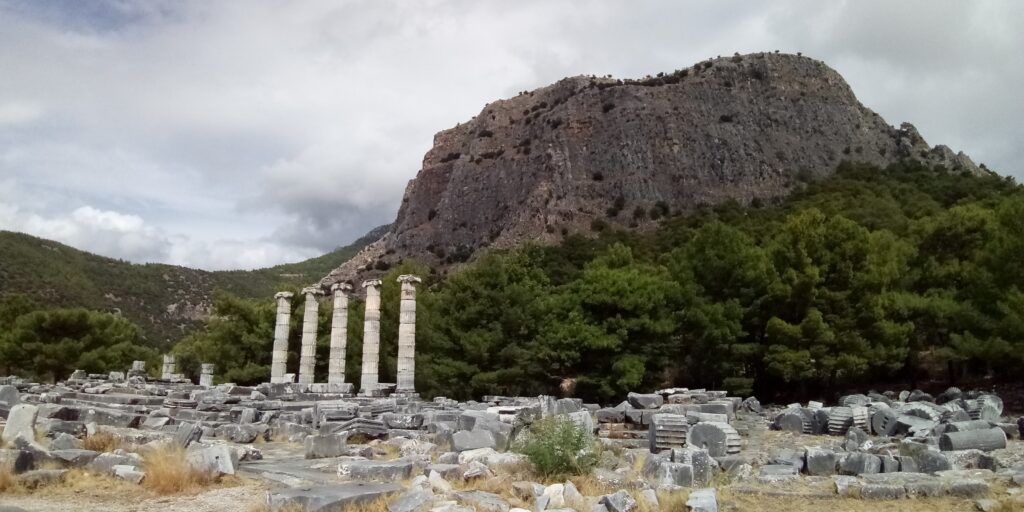
Priene is a clear example. It was built in the 4th century BC on terraces below its acropolis, and you can still walk its straight streets.
Where Can You See These Structures in Turkey?
Most Greek and Roman sites in west and south of Turkey have a few of them but some places show one structure better than the rest. I recommend my guests to look for the agora first, since everything else was built around it.
| Acropolis | Pergamon, on its steep hill above modern Bergama |
|---|---|
| Bouleuterion | Priene, a council house with rows of stone seats |
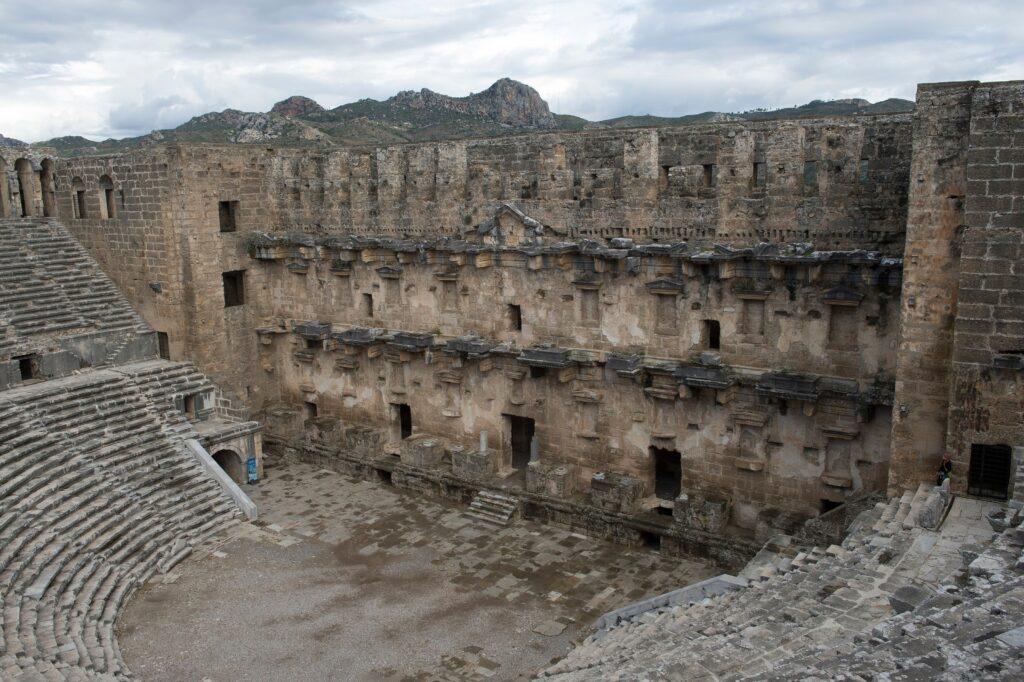
| Theater | Aspendos, built in the 2nd century AD |
| Stadium | Aphrodisias, with room for about 30,000 people |
| Gymnasium and baths | East Gymnasium in Ephesus |
For a theater, Aspendos is hard to beat, because its stage wall still stands. For baths and a gymnasium together, start with the East Gymnasium in Ephesus.
Frequently Asked Questions
What was the agora in an ancient city?
The agora was the open square in the middle of a Greek city, a market and a meeting place for the citizens. It was usually framed by stoas, covered colonnades with shops and offices behind them.
What did the Romans add to Greek cities?
Mostly aqueducts, big bathhouses, arched gates and long colonnaded streets, and they often enlarged the Greek theaters. At Ephesus you can compare the two periods in my post on Roman Ephesus vs Hellenistic Ephesus.
Why were ancient cities built on hills?
A hill gave natural defense, a wide view of the land and often springs nearby. The high part became the acropolis, and the lower city spread on the slopes below it and toward the harbor.
Archaeological guide to Ephesus Ancient City and nearby ruins