Christianity in Turkey has a special relationship with caves. The Christian caves in Turkey I would start with are seven: the Cave of the Seven Sleepers in Selçuk, the Grotto of Saint Paul near Ephesus, Saint Peter’s Cave Church in Antakya, Abraham’s Cave in Şanlıurfa, the Dark Church in Göreme, Gümüşler Monastery near Niğde and the rock churches of the Tur Abdin.
Add Tours Around Turkey as a preferred source on Google
They span from the age of the apostles to the medieval monks, and from the Aegean coast to the Syrian border. For each one I explain what happened there, why it matters and what you actually see today. Two of them come with a warning: the Grotto of Saint Paul is closed to visitors, and Abraham’s Cave is a holy place of Islam.
Why Caves Matter to Christian Turkey
The faith was born in a cave, or so the early tradition holds. Around 248 AD the church father Origen wrote that in Bethlehem “the cave is pointed out where He was born”. Gospels tell us that Jesus was buried in a tomb hewn out of the rock (Matthew 27:60), and that tomb was found empty on Easter morning.
In Asia Minor, in the centuries when being a Christian was dangerous, caves were often where believers prayed, hid and buried their dead. Later, monks carved whole churches and monasteries in the soft rock of Cappadocia. That is why there are so many Christian caves in Turkey, and so many sacred places underground.
I have spent a lot of my working life in caves of one kind or another: the Cave of the Seven Sleepers nearby Ephesus, the cave church of Saint Peter in Antakya, the painted rock churches of Cappadocia. Each one of them carries something specific in the Christian story of this land.
The choice of seven follows the biblical pattern; you can read why in my article on why number 7 is important. However, as with most things in this country, seven is barely the beginning. There are hundreds of sacred caves in Turkey. These are the seven I would start with.
1. The Cave of the Seven Sleepers in Selçuk
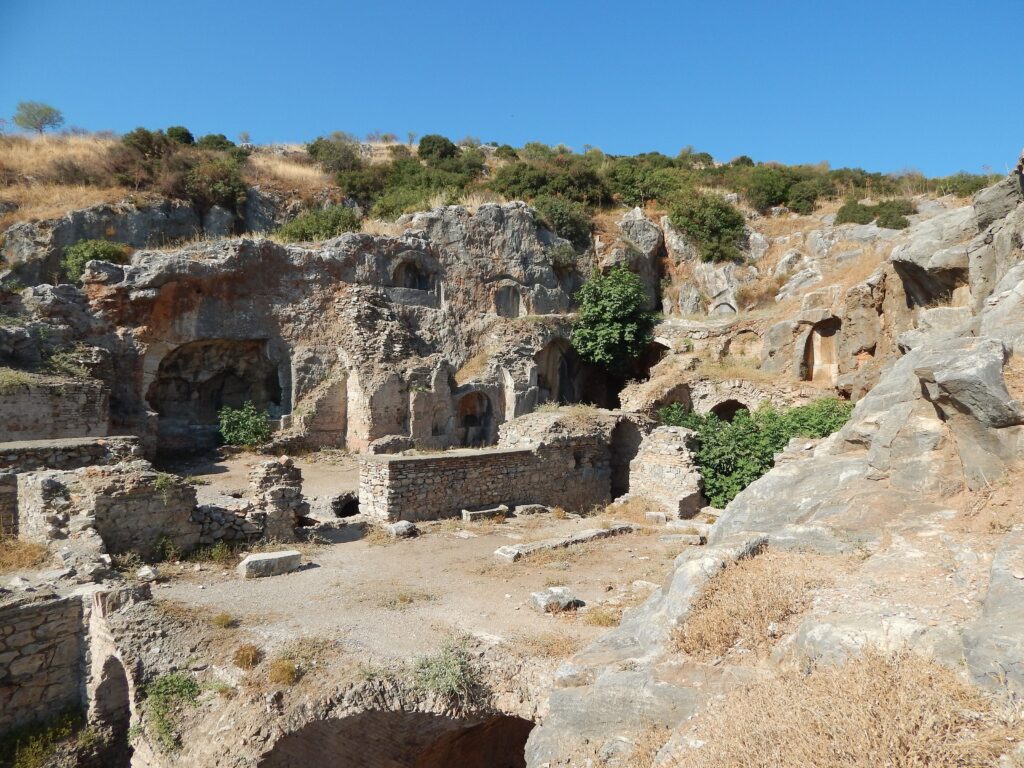
On the slopes of Mount Pion (Panayır Dağı), just outside Ephesus Ancient City, lies the Cave of the Seven Sleepers. According to the legend, seven young Christians of Ephesus fled here during the persecution of Emperor Decius around 250 AD, rather than offer the required sacrifice. They entered into the cave to pray, and they fell asleep.
They woke in the reign of Theodosius II (408–450), nearly two hundred years later, into a Roman Empire that had become Christian. You can read more about those dark years in my article on the persecution of early Christians in Asia Minor.
Story was hugely popular in late antiquity and was retold across both the Christian and the Muslim worlds. The earliest known version is by Jacob of Serugh, a Syriac poet of Edessa, today’s Şanlıurfa. In the Quran the story is in Surah Al-Kahf, “The Cave”, the eighteenth chapter (18:9–26).
By the way, Ephesus is not the only place that claims the cave. The director of the Ephesus Museum in Selçuk has said that more than 40 places in the world are linked with the Seven Sleepers, and three of them are in Turkey. Besides Ephesus, Tarsus and Afşin claim it in Turkey, and there is a famous cave near Amman in Jordan too.
The site was excavated in 1926–1928. The archaeologists found a church built over the grotto and several hundred graves from the 5th and 6th centuries, with inscriptions to the Seven Sleepers on the walls and in the graves. Christians wanted to be buried near the sleepers, they cut their tombs into the hillside around the cave.
What you see today is the ruined church, the vaulted chambers and the rock-cut tombs on the hillside. The site is quieter than the main Ephesus ruins. Please keep it in mind that in November 2023 Anadolu Agency reported the inside of the cave closed for restoration work, and visitors could see it from about 8 to 10 meters. My article The Cave of Seven Sleepers nearby Ephesus tells the legend with the names of the seven young men.
2. The Grotto of Saint Paul near Ephesus
On the northern slope of Bülbüldağı, the ancient Mount Koressos, there is a small cave called the Grotto of Saint Paul. It is the same mountain where the House of the Virgin Mary stands. Let me say it plainly at the start: the grotto is closed to visitors. It is kept locked to protect its fragile paintings, so please do not plan it into your visit.
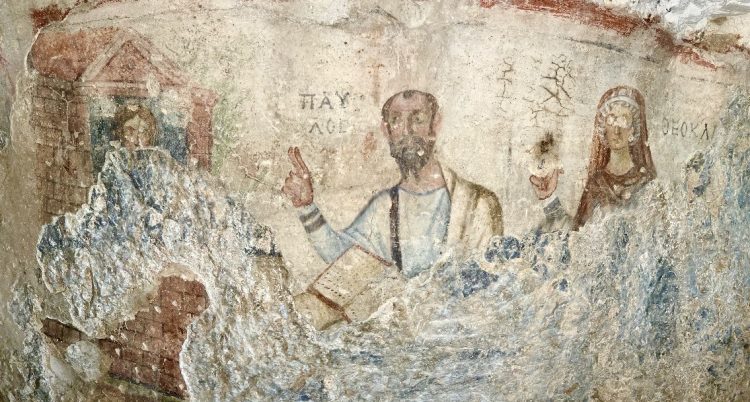
Walls of the cave carry paintings from different periods. In 1998 Professor Renate Pillinger of the University of Vienna discovered, under later plaster, a painting of Apostle Paul together with Thecla and her mother Theocleia. She dates it to the end of the 5th century AD. It is a very rare early image of Paul, and it is painted in the city where he spent nearly three years.
The scene comes from the Acts of Paul and Thecla, a 2nd-century text. Thecla was a young woman of Iconium, today’s Konya. She heard Paul preaching from her window, broke off her engagement and followed him. You can read her story in my article on Mary, Thecla and Lydia in Asia Minor.
In the fresco Paul sits with a book and raises his right hand in the gesture of teaching. Thecla listens from the window of a house, just as in the story. On the other side stands her mother Theocleia, with the same raised hand. At some point her eyes and her raised hand were defaced. Writers explain this in different ways, but the damage is still clearly visible.
I tell the whole story of the cave, with my own photos from inside, in my article on the Grotto of Apostle Paul in Ephesus. That article is the way to see it today, since the cave itself stays closed.
3. Saint Peter’s Cave Church in Antakya
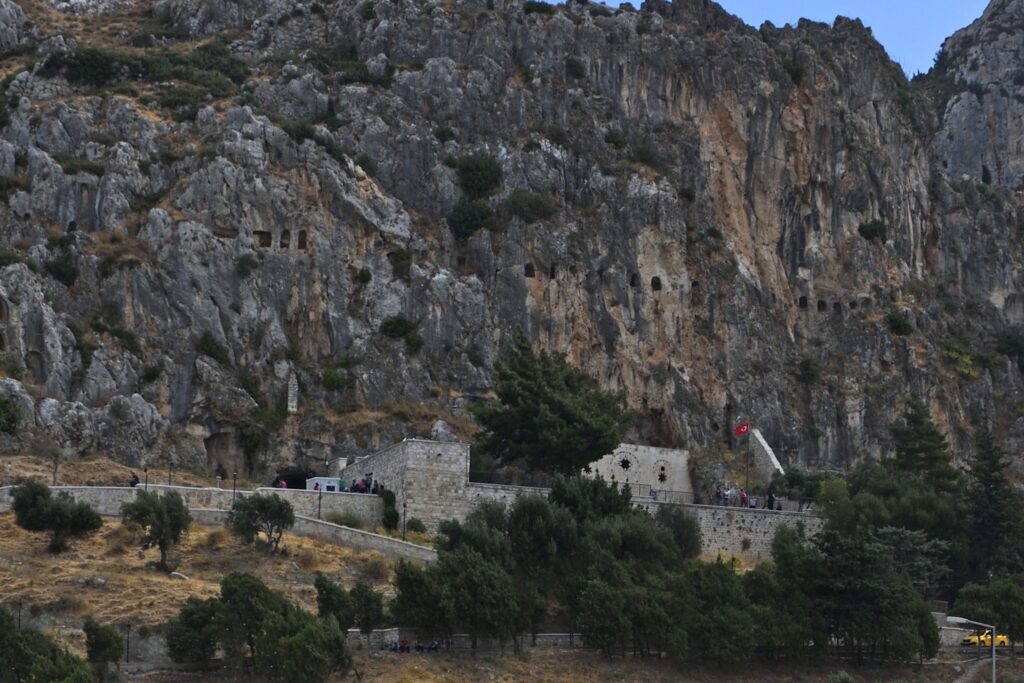
Antakya is ancient Antioch on the Orontes, one of the great cities of the Roman East. Carved into the rocky slope of Mount Starius above the city is a cave that tradition counts among the oldest churches in the world. It is believed that Saint Peter preached here and laid the foundation of the church of Antioch.
Antioch is where the name of our faith began: “And the disciples were called Christians first in Antioch” (Acts 11:26, KJV). Apostle Paul and Barnabas taught here for a whole year, and Peter was also in Antioch too (Galatians 2:11). One of its later bishops was Ignatius of Antioch.
The cave is natural. The oldest surviving parts of the church are from at least the 4th or 5th century: pieces of floor mosaic and traces of frescoes beside the altar. In the 11th and 12th centuries the Crusaders lengthened the church and built a facade. The stone facade you see today was rebuilt by Capuchin friars in 1863, on the orders of Pope Pius IX.
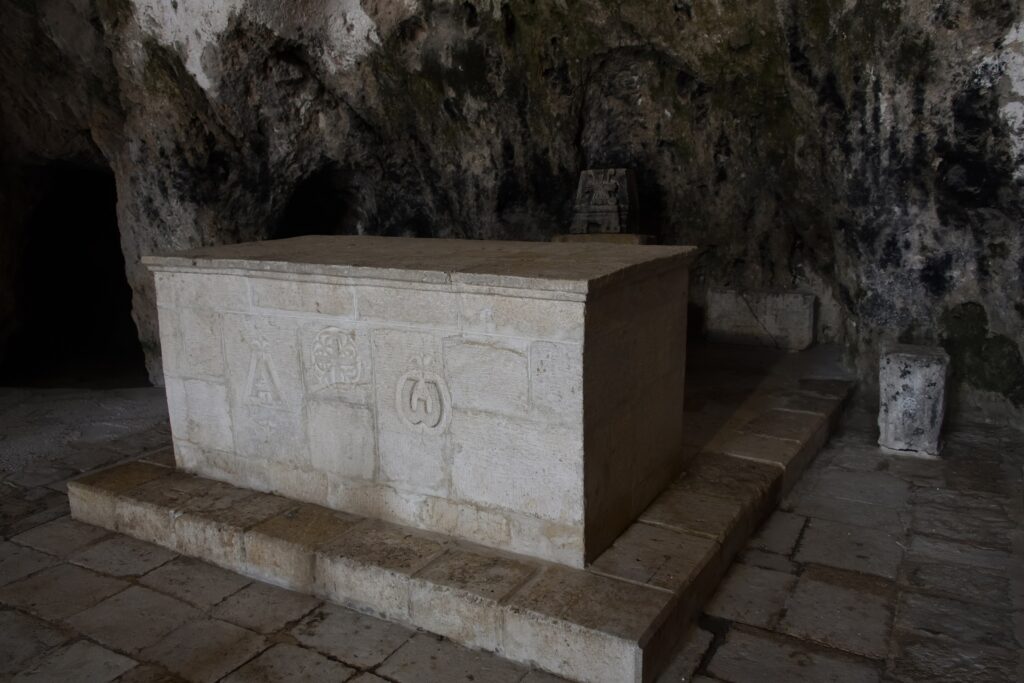
Inside there is simple stone altar, a tunnel that probably let the Christians escape during raids, and water seeping from the rock. People collected this water for baptism and for the sick, and both Christians and Alawites believed in its healing power. Every year on June 29, the feast of Saints Peter and Paul, Catholics hold a ceremony in the cave.
The earthquakes of February 6, 2023 devastated Antakya. The cave church came through them largely intact: Anadolu Agency reported that only a recently built retaining wall was slightly damaged. On January 15, 2024 it became the first heritage site of the city to reopen to visitors, as Milliyet reported in February 2024.
In February 2026, journalists on a press visit organized by Turkey’s Directorate of Communications visited the church. The city around it is still rebuilding, so check the current opening hours before you tour. My short article on Antioch tells more about the city.
4. Abraham’s Cave at Balıklıgöl in Şanlıurfa
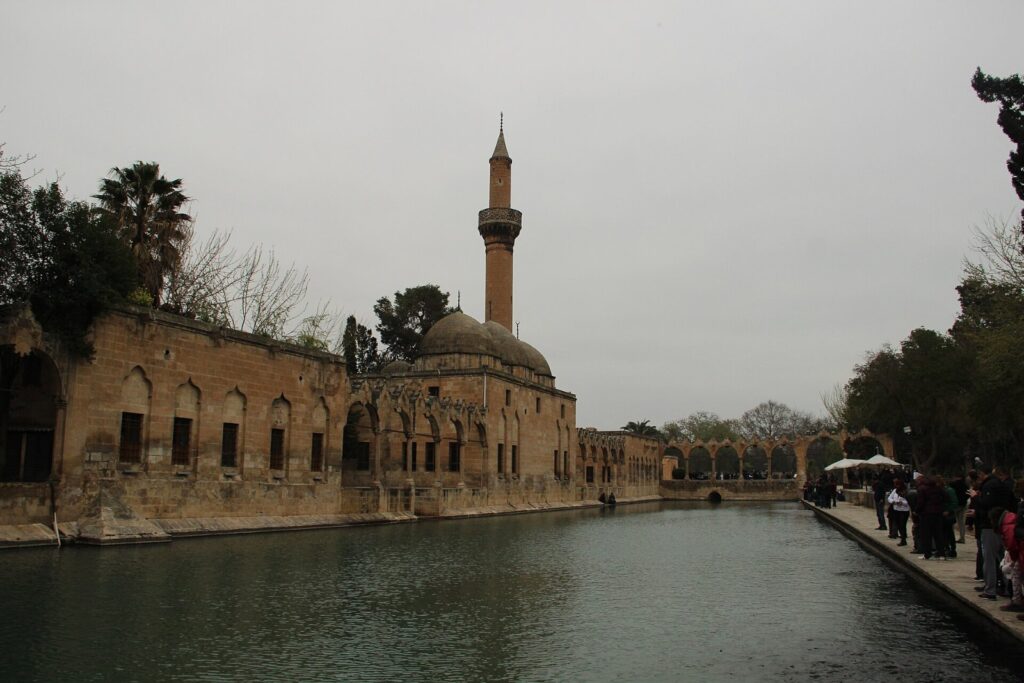
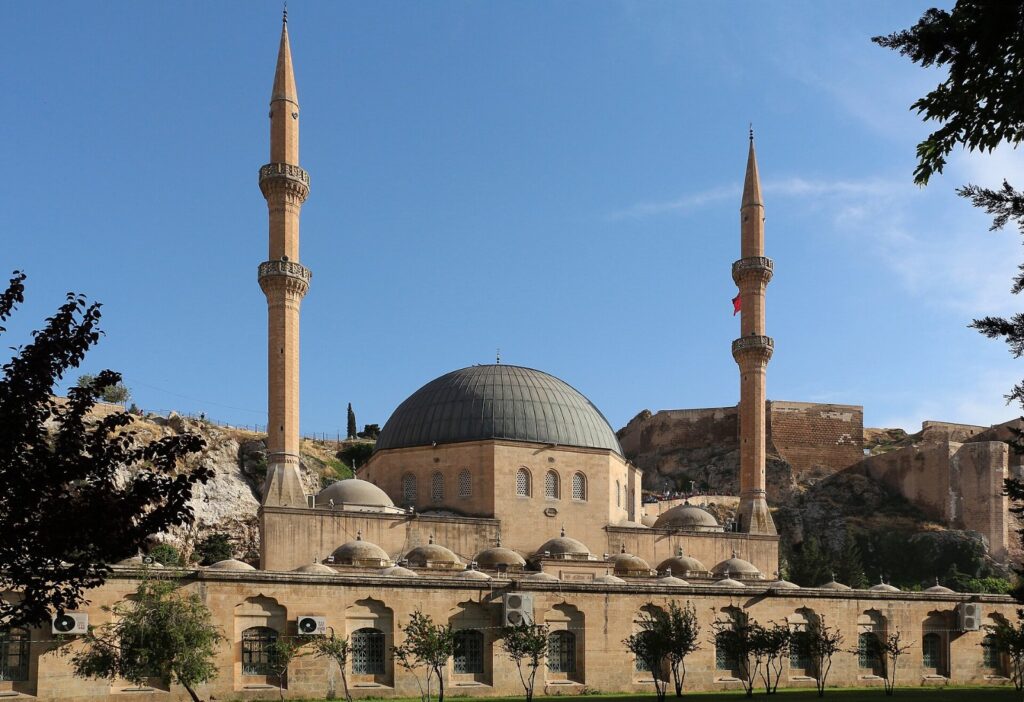
Şanlıurfa is ancient Edessa, in the southeast of Turkey. In the old town there is a small cave that Muslim tradition holds as the birthplace of Prophet Abraham, İbrahim in Turkish. The Mevlid-i Halil Mosque was built at the site. This is a holy place of Islam, not a Christian one, and I include it with respect because Abraham is the father of faith not just for Muslims also for Christians.
Local tradition tells that the tyrant Nimrod had been warned that a child would be born who would overthrow him, so Abraham’s mother hid her baby in this cave. Later, when Abraham challenged the idols, the king had him thrown from the citadel of Edessa into a great fire. In the Quran (21:69) God commands the fire to be cool and safe for Abraham.
Local story adds that the fire turned into water and the burning logs into fish. This is the sacred pool of Balıklıgöl, the “Lake of Fish”, below the citadel. Its carp are sacred, and nobody is allowed to catch or eat them. The Halil-ür Rahman and Rızvaniye mosques stand beside the water.
The Bible tells Abraham’s journey in another way. His family left Ur of the Chaldees and settled in Haran (Genesis 11:31), and the ruins of Harran are laying about 40 kilometers southeast of Şanlıurfa. Stephen says God appeared to Abraham “when he was in Mesopotamia, before he dwelt in Charran” (Acts 7:2, KJV), and Apostle Paul calls Abraham “the father of us all” (Romans 4:16, KJV).
Edessa also has a Christian story of its own. By the end of the 2nd century there was a Christian community here, and King Abgar the Great may have become a Christian around 200 AD. In the 4th century the pilgrim Egeria visited and connected the pools with King Abgar. The mosques by the pools replaced an earlier synagogue and church.
The cave is inside a working mosque complex, so I recommend my guests to visit it as they would visit any mosque. Dress modestly, women cover their hair, and take your shoes off where others do. Most visitors also see Göbeklitepe, a short drive from the city.
5. The Dark Church in Göreme
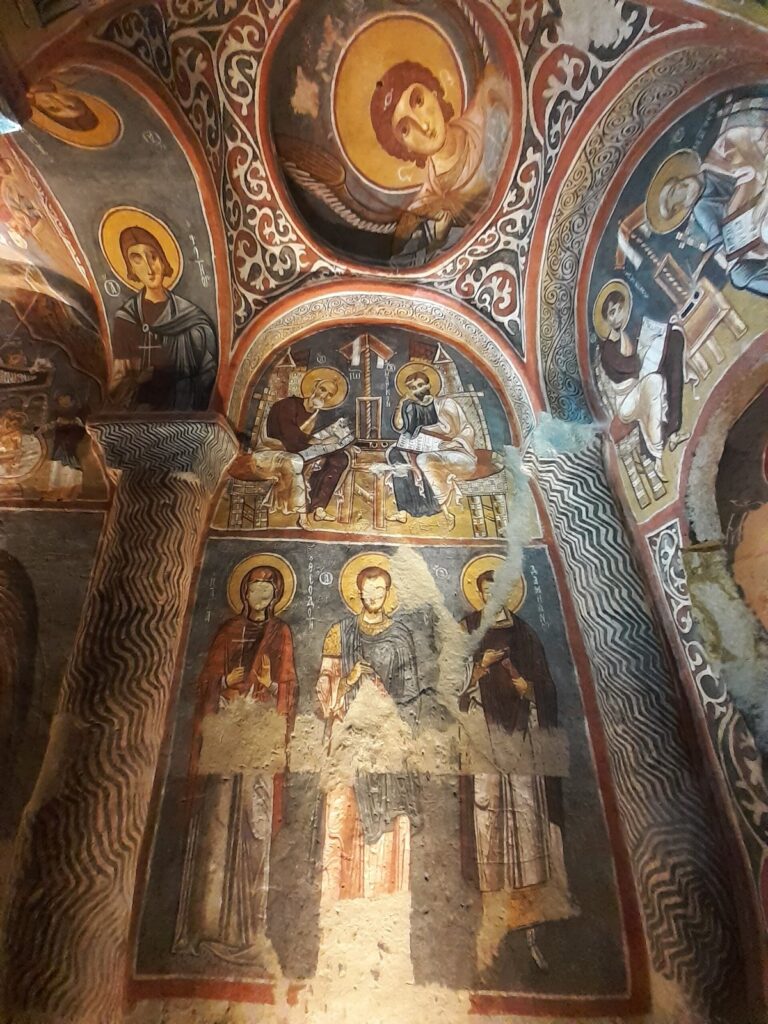
The Dark Church, Karanlık Kilise in Turkish, is a rock-cut church in the Göreme Open Air Museum, part of the Göreme National Park that became a UNESCO World Heritage Site in 1985. It belonged to a monastic compound carved in the 11th century. Only a small round window in the narthex lets in light, and that darkness has kept the colors of its frescoes rich for nearly a thousand years.
The walls tell the story of Christ: Christ Pantocrator, the Nativity, the Adoration of the Magi, the First Bath of the baby Jesus, the Last Supper, the Betrayal of Judas, the Crucifixion and the Anastasis. It is the mature Byzantine art of painting, preserved by the very lack of light that faded it elsewhere.
Church had a hard life too. Until the 1950s it was used as a pigeon house, and it took 14 years of careful work to clean the pigeon droppings from the walls. Today the blues are still vivid and the faces still readable.
The Dark Church has its own extra ticket on top of the Göreme Open Air Museum entry. I totally recommend to buy it. Cappadocia has hundreds of rock churches, and the Dark Church is the one I would recommend if you can go into only one. You can find more in my 10 interesting facts about Cappadocia.
6. Gümüşler Monastery near Niğde
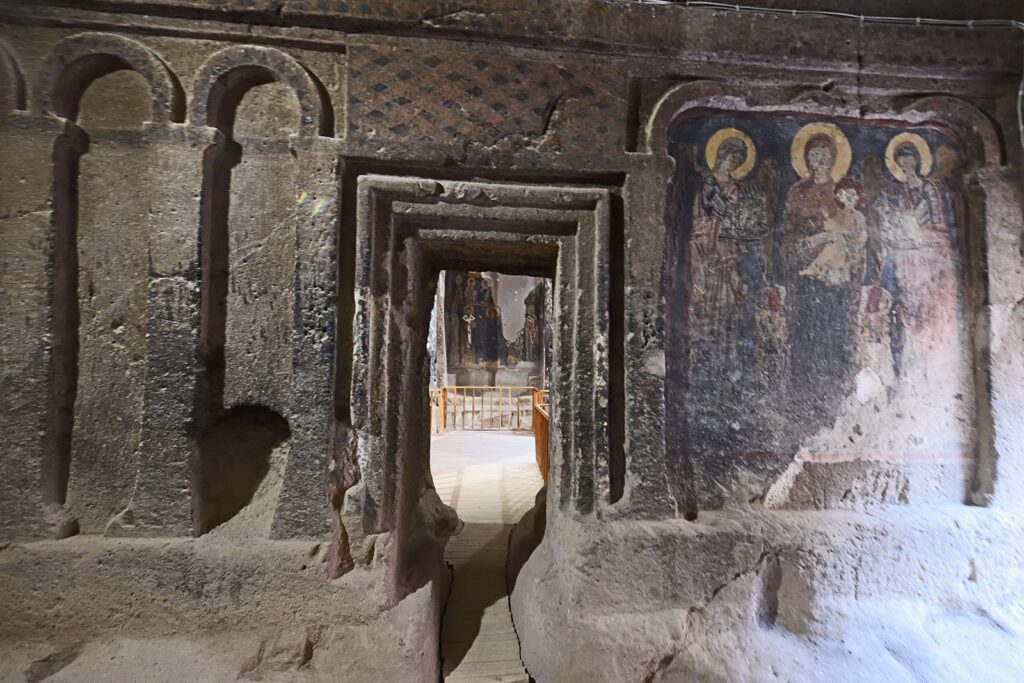
Eski Gümüşler Monastery is less famous than the Göreme churches, but in some ways it is more rewarding for a serious Christian visitor. It lies in the town of Gümüşler, about 10 kilometers northeast of Niğde, in southern Cappadocia. The whole monastery is carved into a great mass of tuff rock in the middle of the town.
It was rediscovered in 1962, which by archaeological standards is yesterday, and restoration began in 1963. The monastery dates from the 10th century. Its frescoes, painted by at least three different artists, are among the finest in Cappadocia. Around a square courtyard you find the church, a chapel, a refectory, a monk’s cell and underground rooms.
In Turkey the most famous painting here is called “Gülen Meryem Ana”, the Smiling Virgin Mary. In Byzantine art the Mother of God usually has a serious, otherworldly face, so a smile is very rare. Some art historians think an old restoration created the smile. Whatever the reason, the effect when you stand infront of her is warm. The site is far less visited than Göreme, which is part of its charm.
7. The Rock Churches of the Tur Abdin
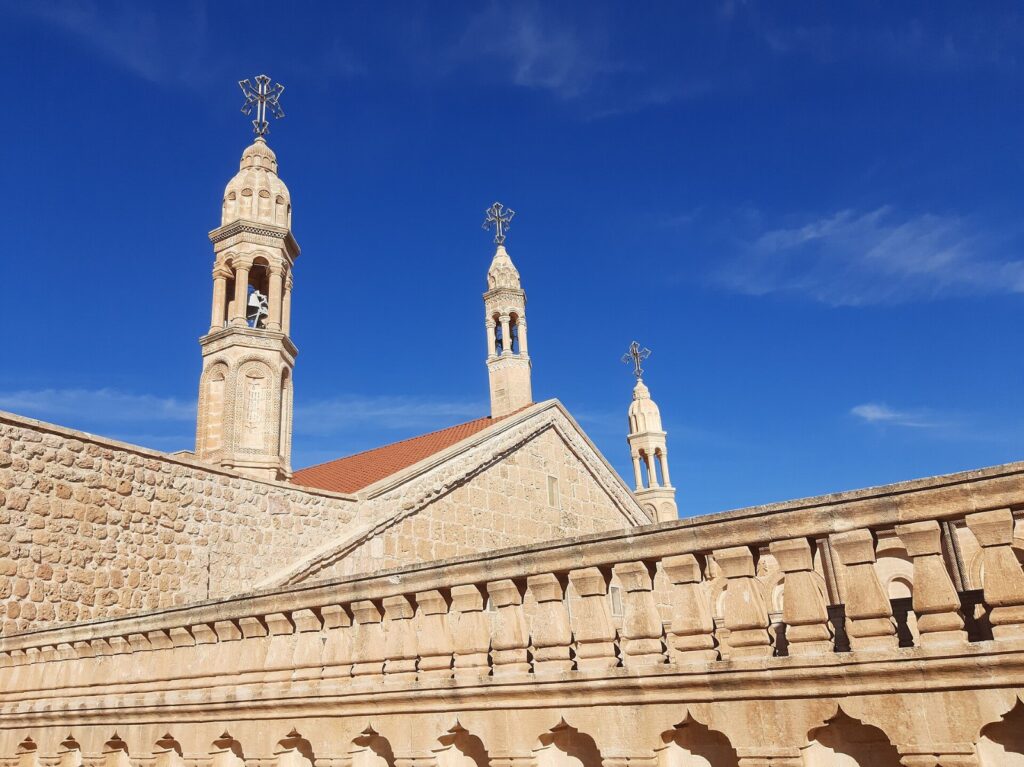
I have grouped several places under one heading here, because the Tur Abdin plateau holds so many old Christian sites that no single cave does justice to it. The name means “Mountain of the Servants of God” in Syriac. It covers mostly the eastern half of Mardin province, on the Syrian border, and it is the heartland of Syriac Orthodox Christianity.
Mor Gabriel Monastery near Midyat was founded in 397 AD by Mor Shmuel and his student Mor Shem’un. It is one of the oldest continuously active Christian monasteries in the world. Beneath its Bell Tower there is an underground church where dawn prayers are held, and in 1394, during Tamerlane’s siege, many of its clergy took refuge in a cave.
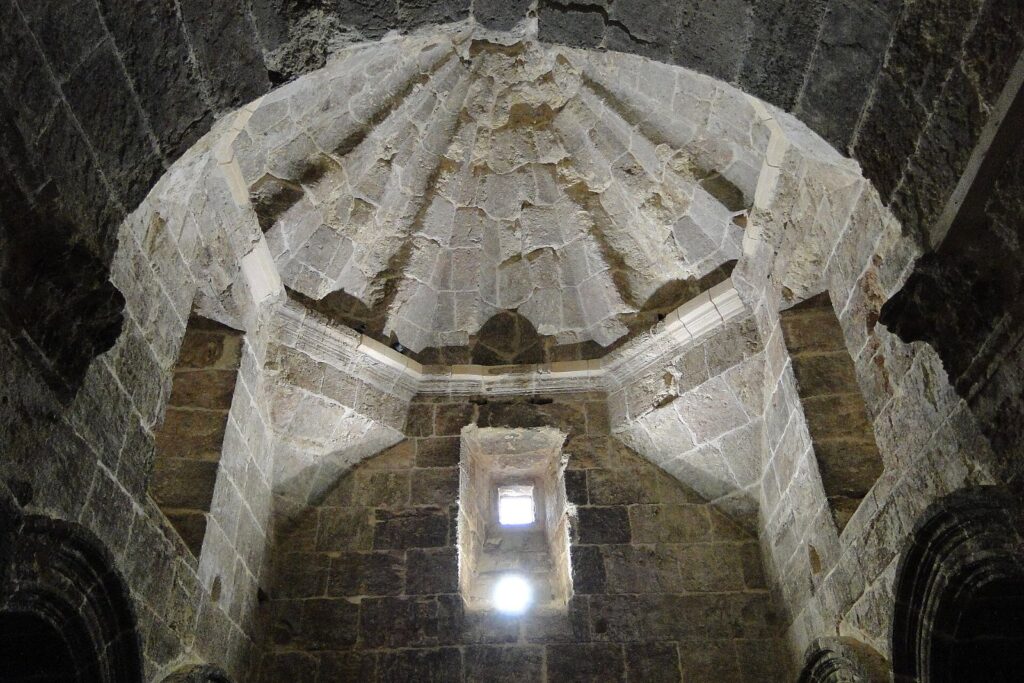
Deyrulzafaran, the Saffron Monastery of Mor Hananyo, stands about 3 kilometers east of Mardin. It became a monastery in 493 AD, and for centuries it was the seat of the Syriac Orthodox patriarchs. Beneath its courtyard there is an underground vault older than the monastery itself, its ceiling held up by huge stones fitted without mortar.
On Mount Izla above Nusaybin, ancient Nisibis, there were dozens of monasteries. Mor Awgin Monastery, believed to go back to the 4th century, was abandoned in the 1970s and refounded in 2008. In the village of Hah, Anıtlı in Turkish, the Church of the Virgin Mary was built around 450 AD, and local legend connects its origin with the Magi.
The Syriac community of the Tur Abdin became much smaller in the 20th century, through war, hard times and emigration to Europe. In 2019 an estimated 2,000 to 3,000 Syriac Christians lived on the plateau, and a few families have come back from the diaspora. The monasteries still function, and the old stone still keeps its silence.
Visiting the Christian Caves in Turkey
Seven caves, from the apostolic age of Saint Peter at Antioch to the medieval monks of Cappadocia and the Tur Abdin. They span Turkey from the Aegean to the Syrian border. Six of them you can visit today, and the seventh, the Grotto of Saint Paul, stays behind a locked door.
Cappadocia and the Tur Abdin go well together on a longer journey. For the bigger picture, read my guide to Christian Turkey for first-time visitors and my list of sacred attractions and routes in Turkey. Caves are quieter than the marble pavements above them. That is part of why they have lasted.
Frequently Asked Questions
Where is the Seven Sleepers cave located?
The best-known Cave of the Seven Sleepers is on the slopes of Mount Pion beside Ephesus, near Selçuk in western Turkey. Excavations in 1926–1928 found a church and several hundred graves there. Other places claim the cave too, among them Tarsus and Afşin in Turkey and a cave near Amman in Jordan.
Can you visit the Grotto of Saint Paul in Ephesus?
No. The Grotto of Saint Paul on Bülbüldağı is closed to visitors and kept locked to protect its fragile frescoes, including the late 5th-century painting of Paul, Thecla and Theocleia. You can visit the House of the Virgin Mary on the same mountain instead.
Is the Church of St. Peter in Antakya open after the earthquake?
Yes. The cave church came through the February 2023 earthquakes largely intact and reopened to visitors on January 15, 2024, the first heritage site in Antakya to do so. Journalists visited it again in February 2026. The city is still rebuilding, so check the opening hours before you go.
Is the Dark Church in Göreme worth the extra ticket?
Yes. The Dark Church needs a separate ticket on top of the Göreme Open Air Museum entry, but its 11th-century frescoes are among the finest in the museum, because very little daylight ever reached them. If you can go into only one church in Cappadocia, make it this one.
Hire Biblical Tour Guide in Turkey
I’m a nationally licensed Turkish tour guide based in Kuşadası, nearby Ephesus, and I have been guiding since 2008. My day guiding is in Ephesus, İzmir and Pamukkale, so the Cave of the Seven Sleepers and the House of the Virgin Mary fit easily into an Ephesus day with me.
My license is valid all over Turkey. For Antakya, Şanlıurfa, Cappadocia or the Tur Abdin, I can join you as your personal guide on a longer journey, while you arrange your transport and hotels yourself or through a licensed travel agency. See my guiding rates and guiding areas or write to me through my contact page.
I hope we will see each other at the Cave of the Seven Sleepers or under the painted vaults of the Dark Church. You can always write to me with your questions about the sacred caves of Turkey. See you soon, Hasan Gülday.