Çukuriçi Mound, or Çukuriçi Höyük, is a prehistoric settlement hill just southeast of Ephesus. The first village was built there about 6700 BC, and thirteen settlements piled up on top of each other over thousands of years. It is one of the oldest known villages around Ephesus.
Add Tours Around Turkey as a preferred source on Google
| Where | Near the town of Selçuk, İzmir Province |
|---|---|
| Period | Neolithic to Early Bronze Age, about 6700 to 2750 BC |
| Finds | Obsidian blades from Melos, a stone amulet, about 50 metal furnaces |
| Excavated | 2007 to 2016 |
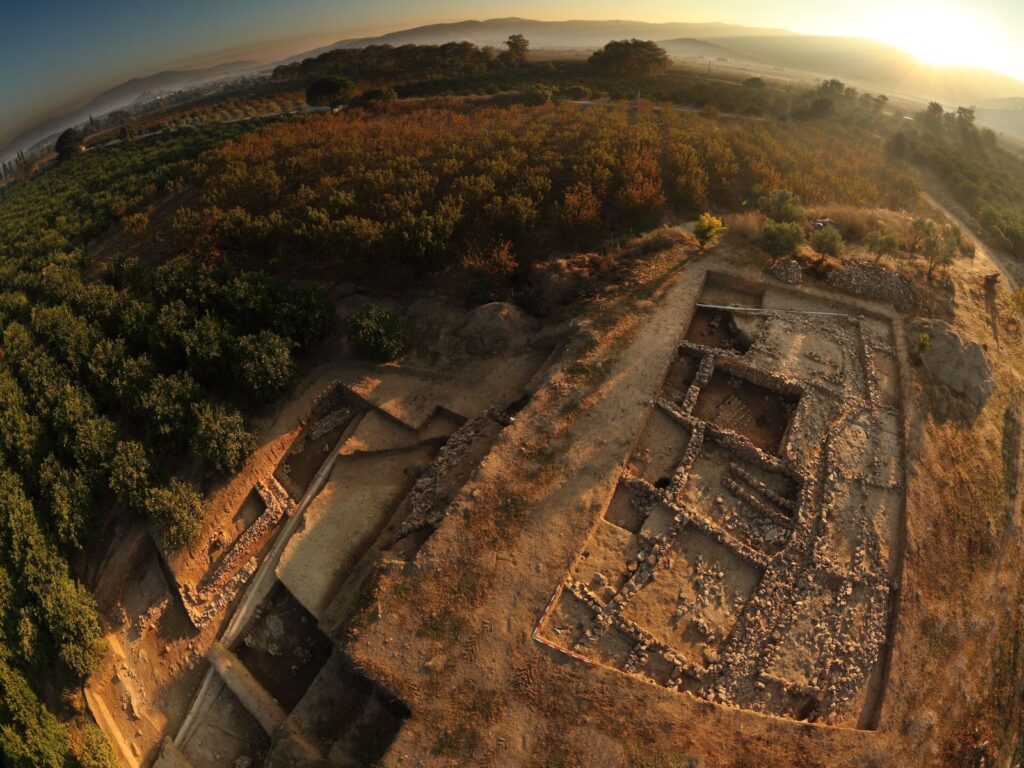
Çukuriçi Mound is located just southeast of the ancient city of Ephesus; It is 500 m away from the Magnesia gate of the city. Although it was suggested to name the mound Apasas which was the oldest known name of Ephesus, the scientists who made the excavation named the settlement according to the name of its location. It was discovered by Ephesus Museum researchers by chance during a leveling study in the tangerine orchard in 1995.

Çukuriçi Mound. The Oldest Settlement Nearby Ephesus Turkey
It is claimed that the settlement was on the seaside in the 3rd millennium BC, based on both the researches made by geomorphologists and the numerous seashell finds in the excavations. The hill is located on an extremely fertile plain even today. It is certain that Çukuriçi Mound is one of the oldest settlements in the region. Its proximity to the Aegean Sea indicates that the people who settled here continued their livelihood by fishing as well as agriculture and animal husbandry.
Excavations at Çukuriçi Höyük
Between 2007 and 2016, an Austrian team led by the archaeologist Barbara Horejs excavated Çukuriçi Höyük and found thirteen settlements, one on top of the other. The oldest one goes back to about 6700 BC, in the Neolithic Age, and the last one ended around 2750 BC, in the Early Bronze Age.
The first people probably came over the sea. In those days the mound stood on the shore of a sea lagoon, and the valley around it was covered with oak trees. About 150 years later they were already building houses with stone foundations, wooden posts and mud walls. They kept pigs, sheep, goats and cattle, and they hunted hare, deer and wild cattle too.
One of the most interesting finds is a group of long and sharp obsidian blades which were found together inside a house. The obsidian came from the island of Melos, about 300 kilometers away across the Aegean Sea. Remains of tuna and other deep sea fish show that these early farmers were good sailors too.
Around 6000 BC the village was abandoned, and nobody knows why. People came back only after a break of about 2,600 years, in the second half of the 4th millennium BC. Their new village was surrounded by a huge ditch at first, most probably for defense, and later the ditch was filled with stones to make room for new buildings.
From about 3000 BC Çukuriçi Mound became a center of metal work. About 50 furnaces were found, together with molds, slag and tools, so we know the whole work from casting to forging. The craftsmen mostly made objects of arsenic copper, and some of gold and silver. They produced for trade too, not only for themselves.
Many spindle whorls and loom weights show that weaving was another important job. Fishermen and small farmers lived beside the metal workers, and this division of work is believed to be an early step toward town life, about 5,000 years ago. Around 2750 BC life on mound came to an end.
Prehistoric Finds Around Ephesus
People lived around Ephesus already in the Neolithic Age, about 6000 BC or even earlier, and two mounds show it: Çukuriçi and Arvalya Höyük. Arvalya lies southwest of Selçuk, right beside the road to Kuşadası, about 4 kilometers from the town.
Arvalya was found by the Ephesus Museum during surface surveys in 1995, the same year as Çukuriçi. Flint and obsidian tools and handmade pottery came out, and the pottery looks like the pottery of Çukuriçi. People lived there from the Neolithic Age till the 2nd millennium BC. Unfortunately farming flattened the mound a lot, and today it is only a low and wide hill.
A tiny amulet from Çukuriçi made the news in 2015. It is a black stone figure of a woman, only 2.1 centimeters, with big breasts and hips and a hole on the neck for hanging. It was found in 2013, and it is believed to be about 9,000 years old.
In 2015 the amulet was put on display in the Ephesus Archeological Museum in Selçuk. Similar figures are known from Ulucak Mound in İzmir and Hacılar Mound in Burdur, so the first villagers of Ephesus were part of a bigger Neolithic world.
Not every prehistoric piece from this area went to a museum. In the 1960s a British woman bought a small jug at Ephesus as a souvenir and took it home. It was a Yortan culture jug, about 4,500 years old. In 2017 she returned it to Turkey, and the jug was given to the Museum of Anatolian Civilizations in Ankara.
Please keep it in mind, taking antiquities out of Turkey is forbidden by law. When we start our walk at the Upper Gate, which is also called the Magnesian Gate, I like to tell to my guests that the story of Ephesus started thousands of years before the marble streets, on a small mound in the orchards nearby.
Frequently Asked Questions
What does Çukuriçi Höyük mean?
Höyük is the Turkish word for a mound built up by many settlements, one on top of the other. Çukuriçi means inside the hollow, so the name is often given in English as Mound in the Valley.
Is Çukuriçi Mound older than the Greek city of Ephesus?
Yes, by thousands of years. The first village on the mound dates to about 6700 BC, while the Greek colonists came, by tradition, around 1000 BC. The story of the city is in my post On Ephesus History.
Can you visit Çukuriçi Mound?
As far as I know, it is an excavation site and not set up for visitors. Finds from the dig are shown in Ephesus Archeological Museum in Selçuk.