Ephesus is called the crossroad of faiths because several religions lived side by side in one city. The religions of Ephesus included the worship of Artemis, a Jewish community, the first Christians, and later the Muslim Turks of Selçuk. Their traces are still here, within a few miles of each other.
Add Tours Around Turkey as a preferred source on Google
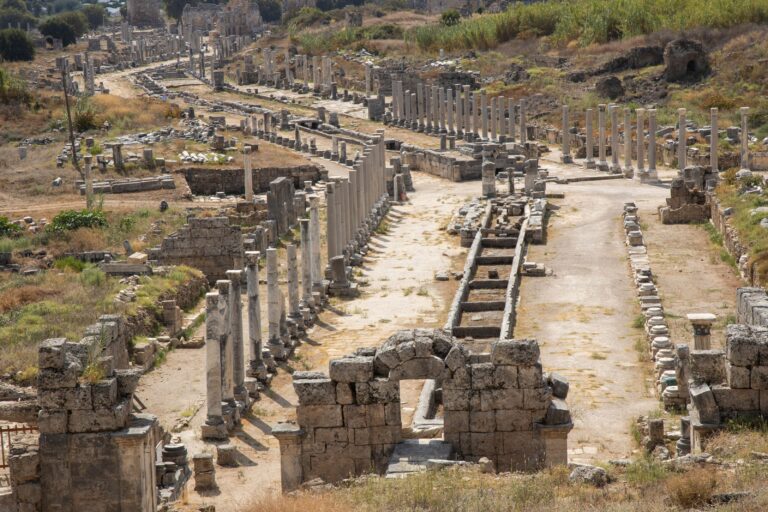
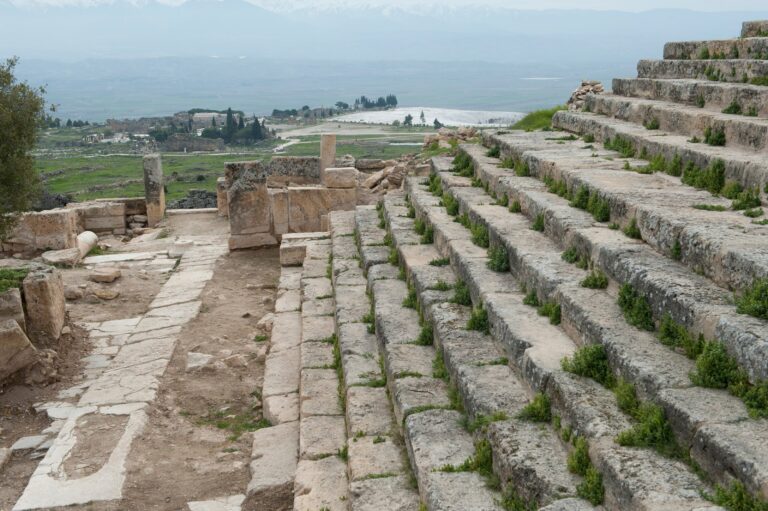
Ephesus, where St. Paul’s preached the Gospel and spread Christianity, a city which was visited by the Egyptian Queen Cleopatra and the Roman Emperor Markus Antonius, and where the Virgin Mary and St. John spent their last days at the nearby House of Virgin Mary, is one of the most important faith centers in Turkey today. You can visit several attractions of faith in an area of 10 kilometer square such as Ephesus Grand Theatre where Apostle Paul Preached, Ephesus Agora where the Apostle had his school, House of Virgin Mary or Basilica of Saint John, and many more! Let’s have a brief look at the attractions which made us call Ephesus: The Crossroads of Faiths.
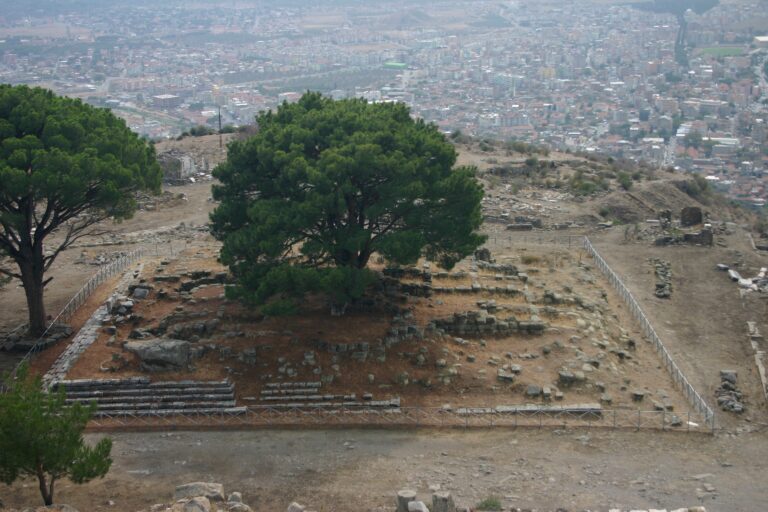
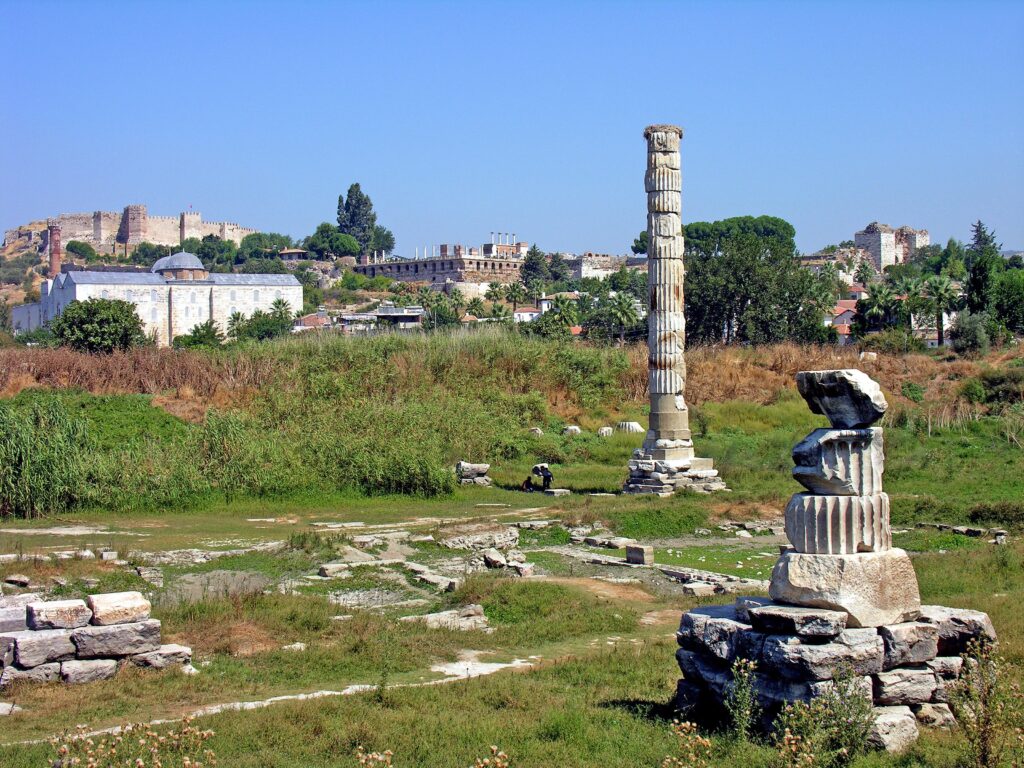
- The Temple of Artemis nearby Ephesus was one of the seven wonders of the ancient world. Today some of the foundations and columns of this beautiful attraction can be visited. Temple of Artemis used to be a pilgrimage center for the believers of the Goddess Artemis or later called Goddess Diana.
- Basilica of Saint John the Evangelist hosts the grave of Saint John. Apostle John spent years in Ephesus preaching and protecting Virgin Mary. He was later exiled to Patmos Island but then he came back to Ephesus following his pardon by the emperor of Roman Empire.
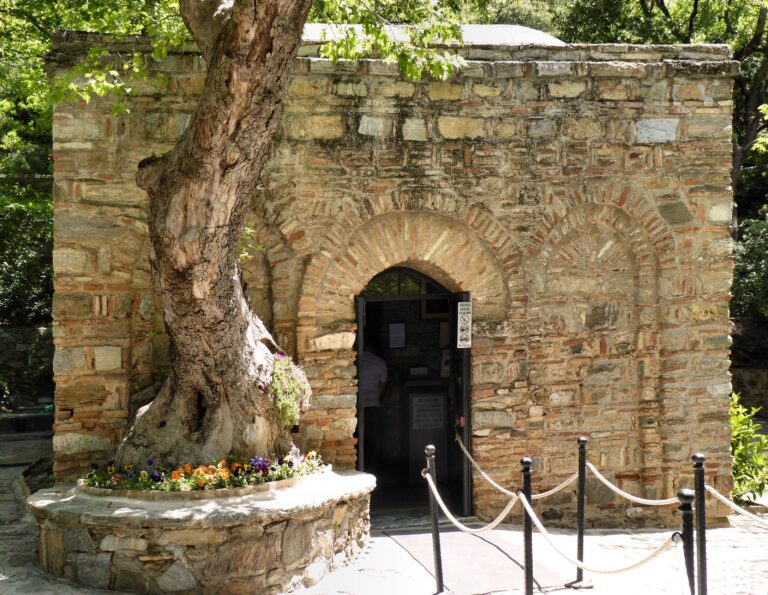
- House of Virgin Mary hosted Virgin Mary and Saint John the Evangelist. Mary left this house after 3 years and went back to the Jerrusalem before her ascension.
- Grotto of Seven Sleepers had seven young Christians being locked in and slept for 200 years. This place, which was built as a church over their graves, is still considered sacred for Christians and Muslims today.
- Grotto of Saint Paul is 80 meters above Ephesus Ancient City. A well preserved frescoe of Saint Paul can be seen in this little cave-church.
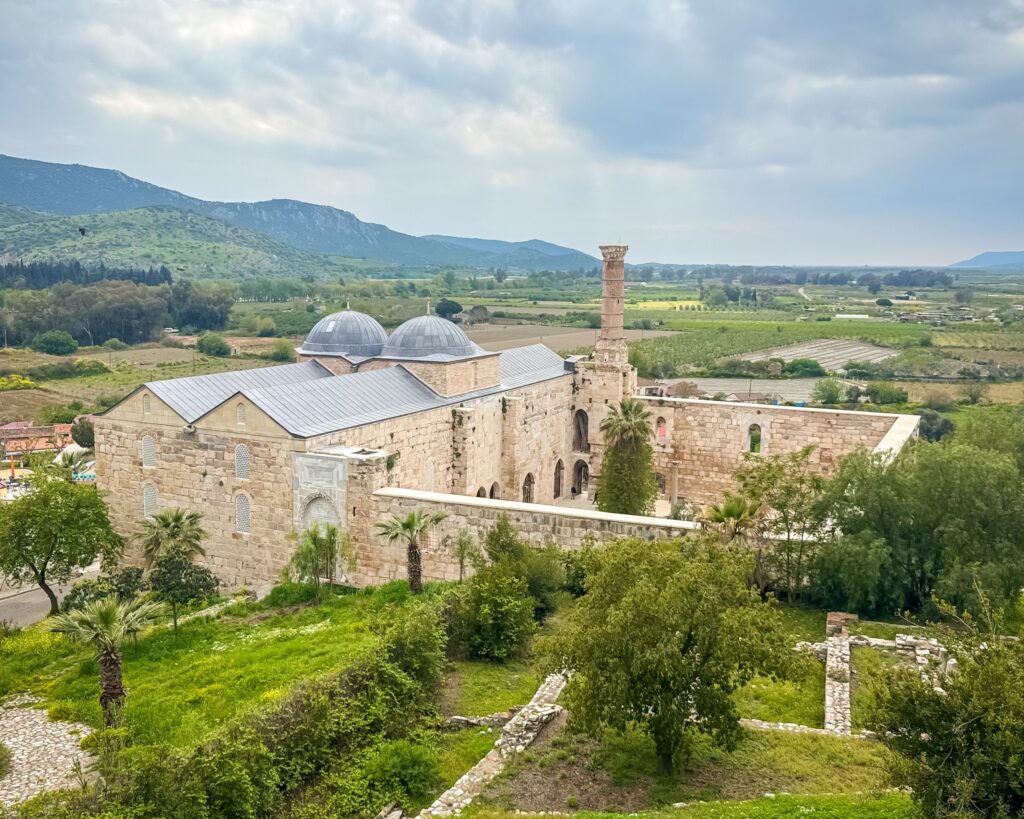
- Isa Bey Mosque was built in 1375. The building is the oldest known example of the Turkish mosque type with courtyards and the Anatolian columned mosques, and has typical Seljuk architectural features.
Artemis Worship in Ephesus
The worship of Artemis in Ephesus is older than the Greek city itself. It is believed that the Greek settlers found an older mother goddess here and gave her the name Artemis. Her statues look very different from the Greek huntress. She wears a tall crown, and many oval shapes cover her chest. People still argue about what they mean.
The goddess was so important that the silversmiths of Ephesus saw Paul’s preaching as a danger for their business, because they sold small silver shrines of her. A crowd filled the Great Theater and shouted “Great is Artemis of the Ephesians!” for about two hours (Acts 19:23-34). People kept honoring Artemis at her sanctuary till about the year 400.
The Jewish Community of Ephesus
Jews had lived in Ephesus long before Paul came. Roman officials wrote letters to protect them: they did not have to serve in the army, they could keep the Sabbath, and they could send their Temple money to Jerusalem.
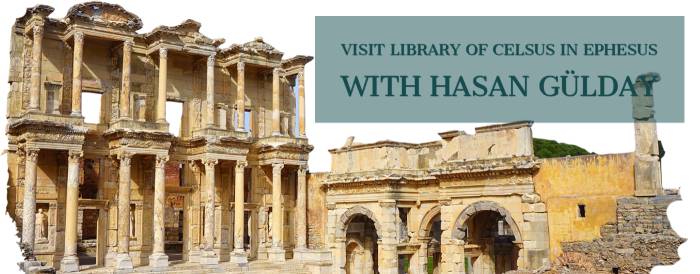
Carved menorahs can still be seen in the ruins, one of them on the steps of the Library of Celsus. My post Judaism in Ephesus tells the longer story.
The First Christians in Ephesus
Christianity came to Ephesus in the AD 50s. Paul lived here for about three years. He taught first in synagogue and then in the school of Tyrannus (Acts 19:8-10). Later the church of Ephesus became the first of the seven churches in the Book of Revelation (Revelation 2:1-7).
Ephesus stayed an important Christian center for centuries. In 431 the bishops met in the Church of Mary and agreed to call Mary the Mother of God. You can read about it in my post on the Council of Ephesus of 431.
Islam and Ephesus Today
The Turks took Ayasuluk Hill in the early 1300s, they made it a busy town with mosques, baths and caravanserais. The Isa Bey Mosque was built for their ruler Isa Bey by an architect from Damascus, and it stands almost next to the Basilica of Saint John. So the whole story of Ephesus is visible in a few steps.
Selçuk is a Muslim town today, and the call to prayer is part of the day here. For me, this mix of faiths is the most special thing about Ephesus.
Frequently Asked Questions
Was there a synagogue in Ephesus?
Yes. The Bible says Paul spoke in the synagogue of Ephesus for three months (Acts 19:8). Archaeologists have not found the building yet, but the carved menorahs show the Jewish community. See my post Synagogue in Ephesus.
Which religions were practiced in ancient Ephesus?
Mostly the worship of Artemis and other Greek and Roman gods, with the cult of the emperors. A Jewish community lived here too. Christianity came in the AD 50s and slowly became the main faith. Muslims arrived with the Turks in the 1300s.
Do Muslims visit the House of the Virgin Mary?
Yes, both Christians and Muslims visit it. Mary is respected in Islam as Maryam, the mother of Jesus, and the Quran has a whole chapter with her name. By the way, we call her Meryem Ana in Turkey.