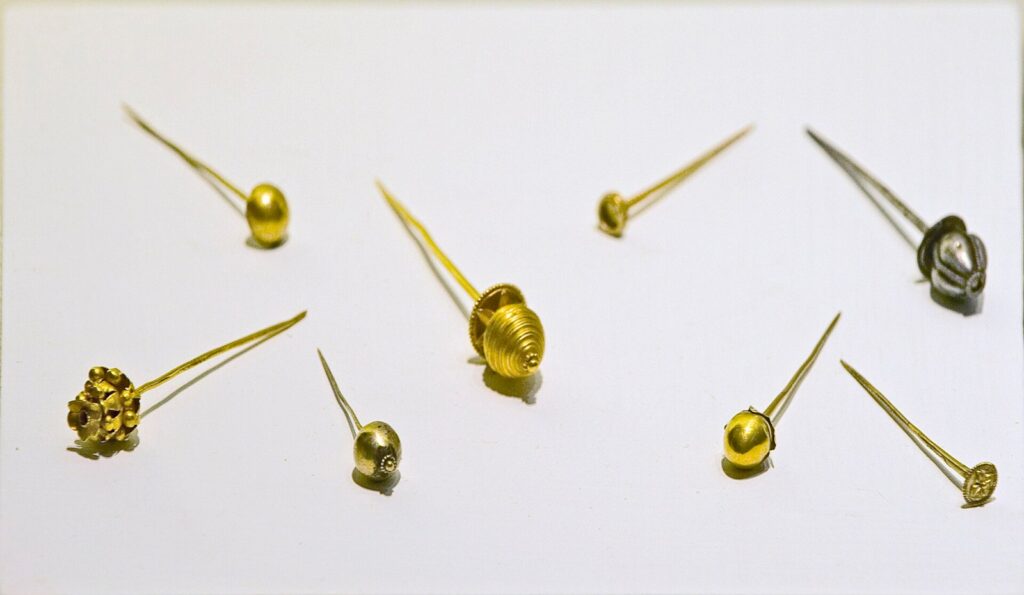
Ancient jewelry in Ephesus was found in a tomb house in the burial area of the ancient city. It was a set of 18 gold pieces, about 1,700 years old, found together with silk cloth woven with gold thread.
Add Tours Around Turkey as a preferred source on Google

Silk fabrics using gold threads were unearthed with 18 pieces of gold jewelry, about 1700 years old. The fact that the artifacts found were made with very high-quality workmanship leaves no doubt that the tombs belong to people from the higher layers of Ephesus. The rings, hairpins, and pendants that the archaeologists cleaned with great care were taken from the excavation area and taken to the Ephesus Archaeological Museum.
The Tomb House of Ephesus
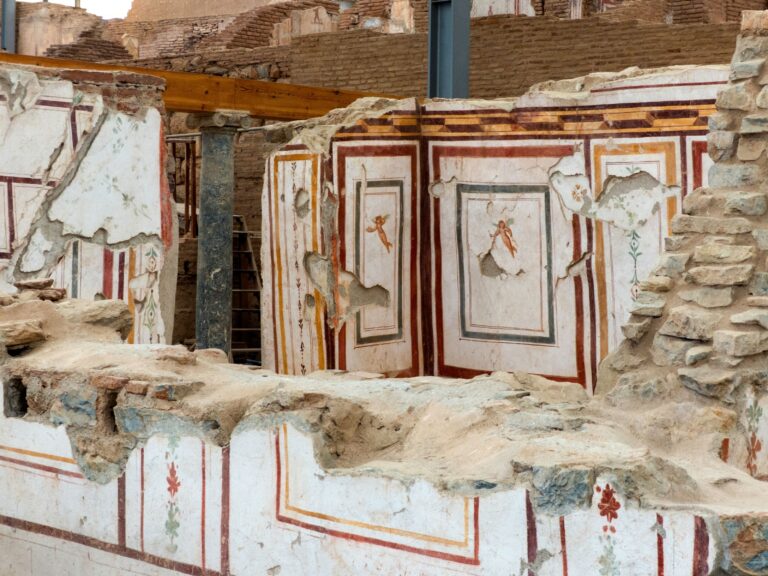
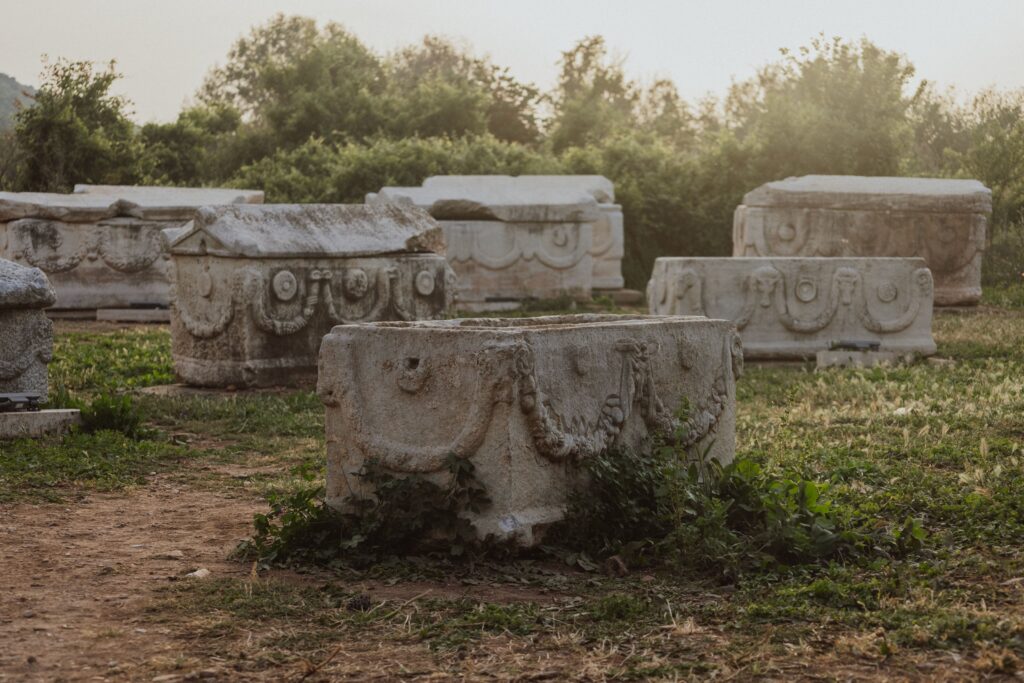
The tomb house had five tombs, and the skeletons of 55 people lay in them, buried at different times. The walls were decorated with paintings and mosaics, so it was probably a place for rich families.
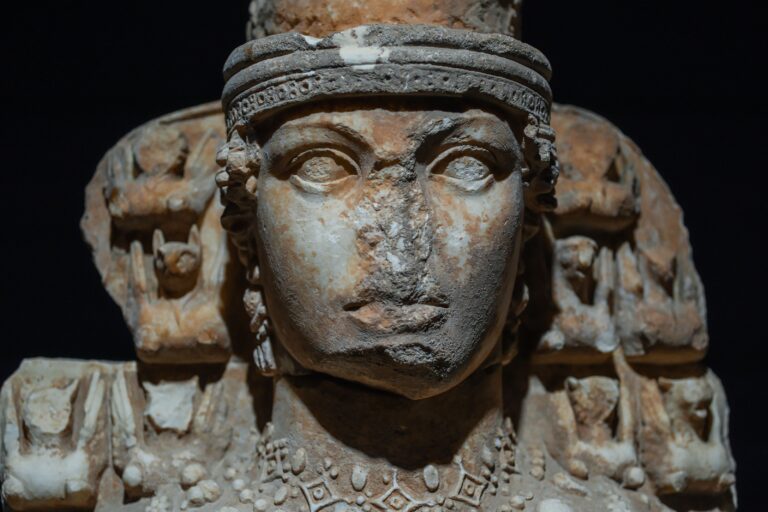
One of the rings has a tiny figure of Artemis cut into an onyx stone. Lines are so fine that you can see them only with a magnifying glass. Artemis was the goddess of Ephesus, so seeing her on a ring is not a surprise.
What the Gold and Silk Tell Us
Silk had to travel a very long way from the east to reach the Mediterranean, so a cloth with gold thread was a real luxury. The excavators were surprised to find such things, because Ephesus was plundered many times over the centuries.
The pieces are about 1,700 years old, so they belong to the 4th century AD. In those years people in Ephesus were changing their religion, and the tomb house also shows it, too. You can read more in my post on the Christian community of Ephesus.
Frequently Asked Questions
Where can I see the jewelry found at Ephesus?
The finds went to the Ephesus Archaeological Museum in Selçuk. What is on show changes from time to time, so ask at the museum desk. Its grave finds hall has jewelry and burial objects from Ephesus.
Were the people in the tomb house pagan or Christian?
Both. It was understood that the earlier burials were pagan and the later ones Christian. So the tomb house was used before and after the change of religion.
Who wore gold jewelry in Roman Ephesus?
Mostly people with money. Gold rings, pendants and pins showed rank, and rich families also paid for tombs with paintings and mosaics. Poorer people wore simpler pieces of bronze or glass.