Ephesus vs Antioch compares two great cities of the early church, both in today’s Turkey. Antioch on the Orontes, now Antakya, was founded in 300 BC and peaked as the capital of Roman Syria in the 1st to 4th centuries AD; there believers were first called Christians. Ephesus peaked as the harbor capital of Roman Asia in the 1st and 2nd centuries AD, and Paul stayed there longest.
Add Tours Around Turkey as a preferred source on Google
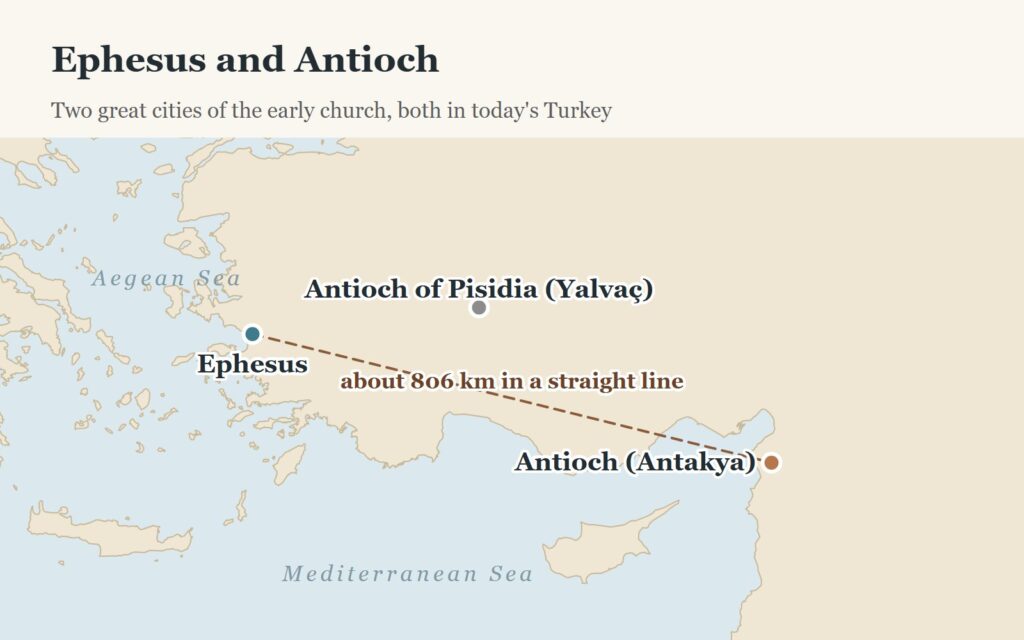
There is a second Antioch in Turkey, so let me clear this first. Antioch of Pisidia lies near Yalvaç, and Paul preached in its synagogue (Acts 13:14). It is a different city, and you meet it in my article on the cities visited by Apostle Paul in Asia Minor. My guests mix the two all the time. Let’s have a look at the great Antioch.
Ephesus vs Antioch at a Glance
Here are the two cities in short.
| Topic | Ephesus | Antioch |
|---|---|---|
| Peak era compared | Roman Imperial, 1st to 2nd century AD | Seleucid from 300 BC; Roman peak, 1st to 4th century AD |
| Town today | Selçuk, İzmir Province | Antakya, Hatay Province |
| Setting | Harbor city at the Cayster mouth | Inland on the Orontes, below Mount Silpius |
| Roman rank | Capital of the province of Asia | Capital of the province of Syria |
| Hellenistic founder | Lysimachus, about 290 BC | Seleucus I, 300 BC |
| Famous sights | Library of Celsus, Great Theater | Saint Peter’s Cave Church, mosaics |
| In the Bible | Paul’s longest stay, a letter, Revelation | “Christians” first, Paul’s home church |
| UNESCO | World Heritage List, 2015 | Two sites on Turkey’s tentative list |
Founders, Setting and Harbors
Both cities owe their Hellenistic form to generals of Alexander the Great. Seleucus I Nicator founded Antioch in 300 BC and named it for his father, Antiochus. Lysimachus moved Ephesus to its present place about 290 BC and gave it new walls.
Their settings were very different. Antioch lay inland on the Orontes river, below Mount Silpius, and its port was Seleucia Pieria on the coast. Ephesus stood at the mouth of the Cayster, the Küçük Menderes, with ships at its door. The river slowly filled harbor with silt, and today the ruins lie about 5 kilometers from the sea.
Under Rome both became capitals. Antioch was the seat of the province of Syria from 64 BC, and Ephesus, it is believed from the time of Augustus, the seat of the province of Asia. It is said that ancient writers ranked Antioch third among the cities of the empire, after Rome and Alexandria. Ephesus called itself the first and greatest metropolis of Asia.
Streets, Lights and Great Sights
Antioch was proud with its main street. It ran a long way through the city with colonnades on both sides, so people could walk in the shade. Ancient Writers also praised its street lights, which burned through the night. Ephesus had lights too: an inscription from late Roman times names fifty lamps on Harbor Street, the road from the theater to the port.
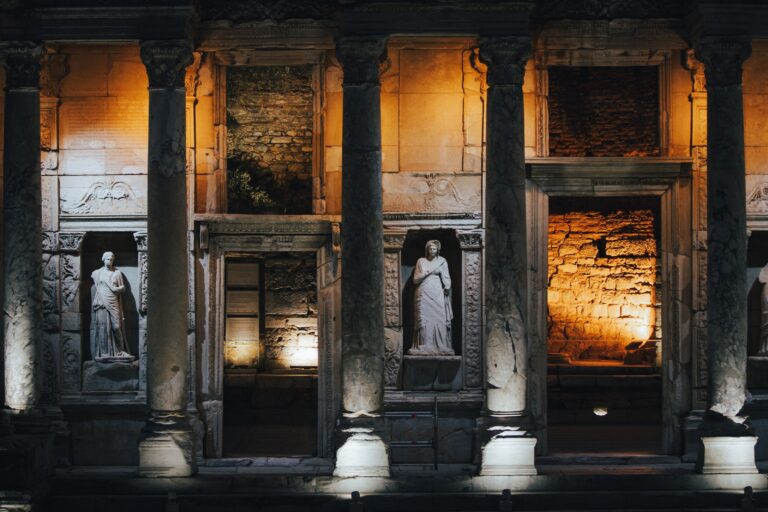
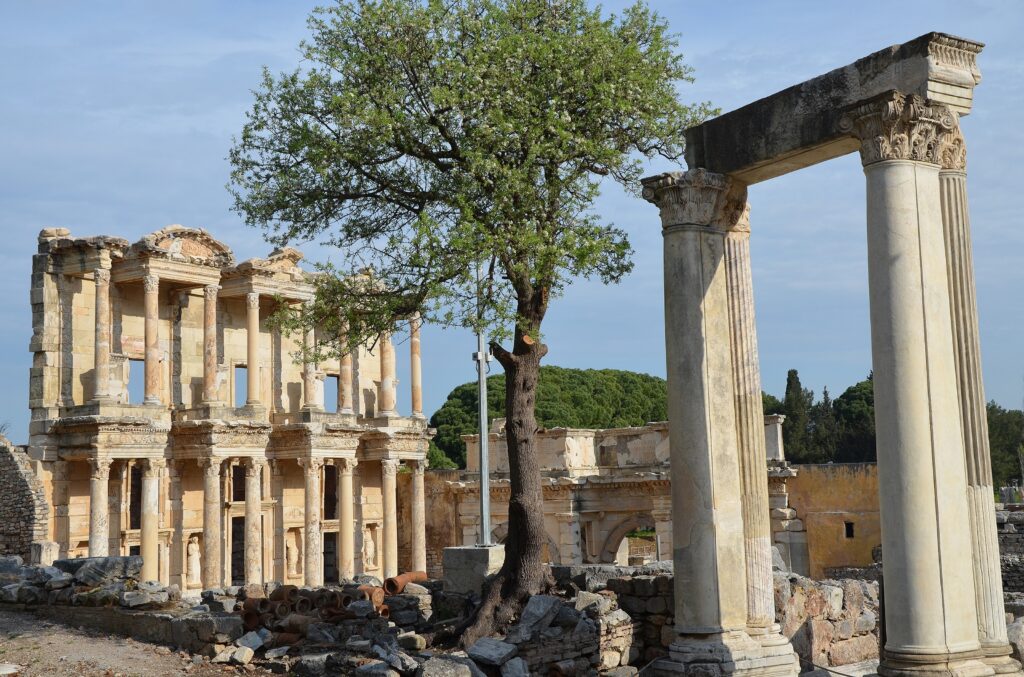
Outside Antioch lay Daphne, a green suburb of springs and cypress groves, and Antioch held its own Olympic games in Roman times. Ephesus had the Temple of Artemis, one of the Seven Wonders of the Ancient World, the Library of Celsus and the Great Theater, which held about 24,000 people, it is believed.
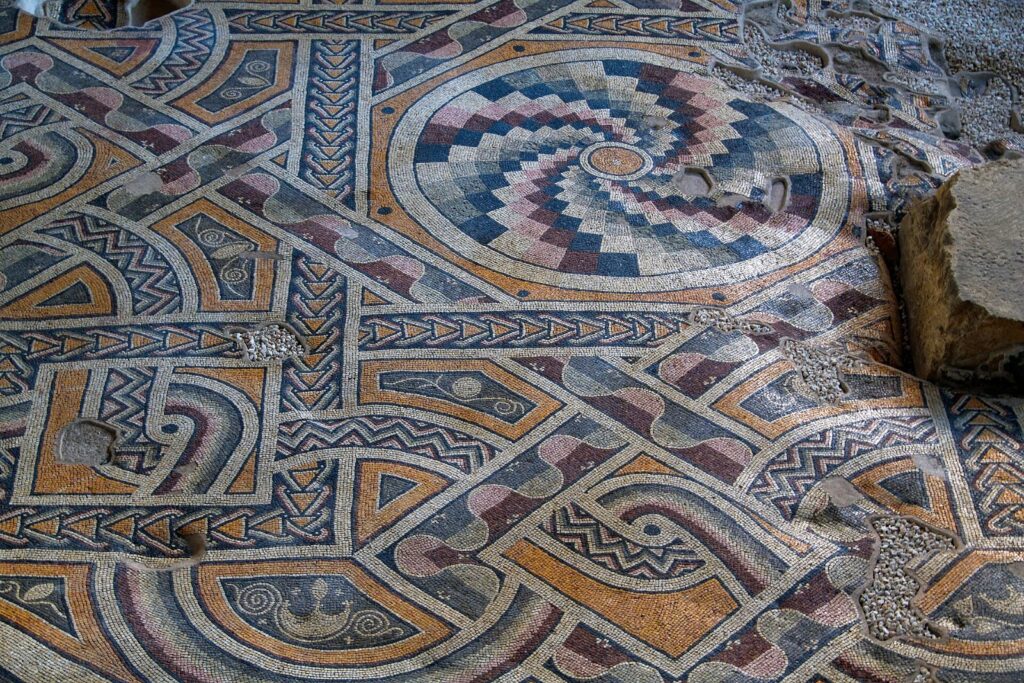
The people of Antioch loved color on their floors. Their houses and villas were paved with mosaics of gods, hunts and seasons, and many are now in the Hatay Archaeology Museum. In Ephesus you see the same love of decoration in the Terrace Houses.
Libanius, a great teacher of speech, and John Chrysostom, later a famous preacher in Constantinople, were born in Antioch. By the way, Chrysostom means “golden mouth” in Greek, a nickname his sermons earned him. Ephesus gave us Heraclitus the philosopher and Soranus the doctor. Antioch was also struck by great earthquakes, in AD 115 and again in 526.
Here are the peak-era points side by side.
| At its peak | Ephesus | Antioch |
|---|---|---|
| Founder | Lysimachus moved the city | Seleucus I Nicator |
| Port | Its own harbor, slowly silting | Seleucia Pieria on the coast |
| Roman province | Asia | Syria |
| Main street | Harbor Street, fifty lamps | Long colonnaded street, lit at night |
| Great sight | Temple of Artemis | Daphne and its springs |
| Games | Festivals for Artemis | Olympic games of Antioch |
| Famous natives | Heraclitus, Soranus | Libanius, John Chrysostom |
| Church rank | Leading church of Asia | Seat of a patriarchate |
Antioch and Ephesus in the Bible
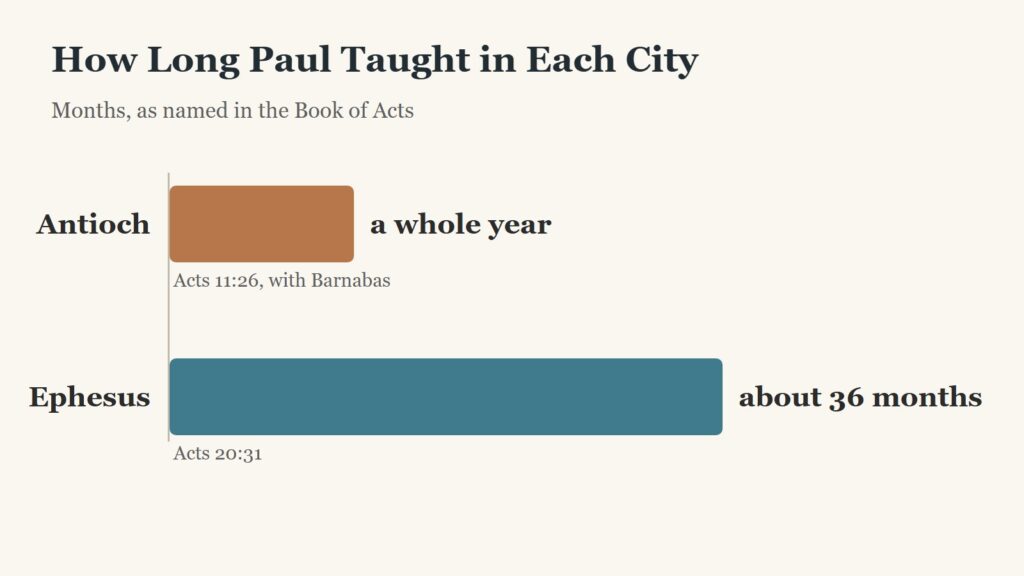
This is where the two cities meet. Antioch appears early in Acts: Nicolas, “a proselyte of Antioch”, was one of the seven men chosen in Jerusalem (Acts 6:5). Later Barnabas went to Tarsus, found Saul and brought him to Antioch, where they taught a whole year. Then comes the famous line: “the disciples were called Christians first in Antioch” (Acts 11:25-26).
Antioch was Paul’s home church, the church there laid hands on Barnabas and Saul and sent them on the first journey (Acts 13:1-3), then welcomed them back (Acts 14:26-28). The second journey started there (Acts 15:35-41), and so did the third (Acts 18:22-23). Peter also came to Antioch too (Galatians 2:11). You can follow all three on my interactive map of Paul’s missionary journeys.
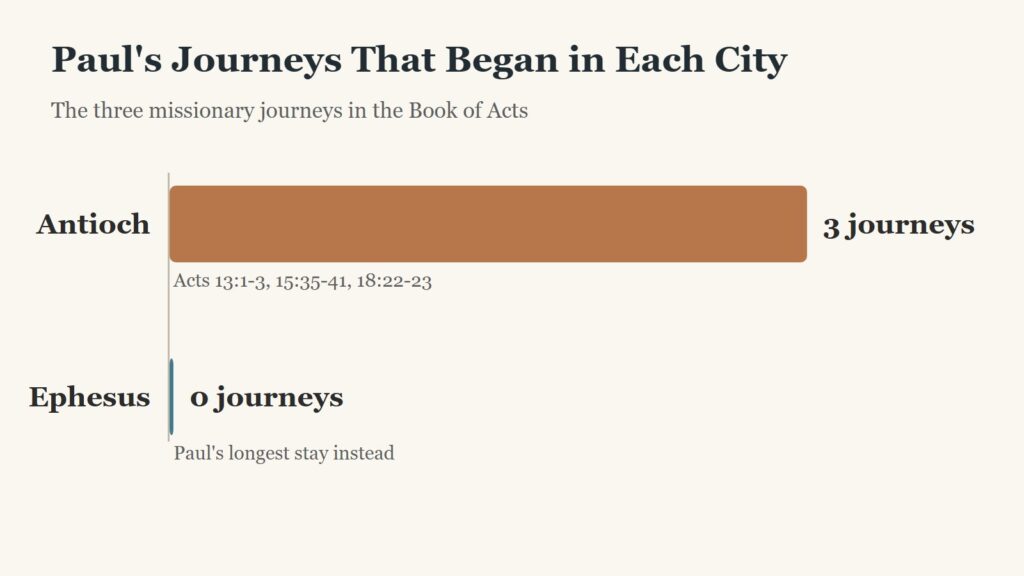
Ephesus was a home rather than a starting point. Paul taught there for about three years (Acts 20:31), the longest stay that Acts gives. I tell that story in Paul’s second visit to Asia Minor and his Ephesian years. For Antioch, Acts names “a whole year” with Barnabas, and later a “long time” (Acts 14:28) with no number.
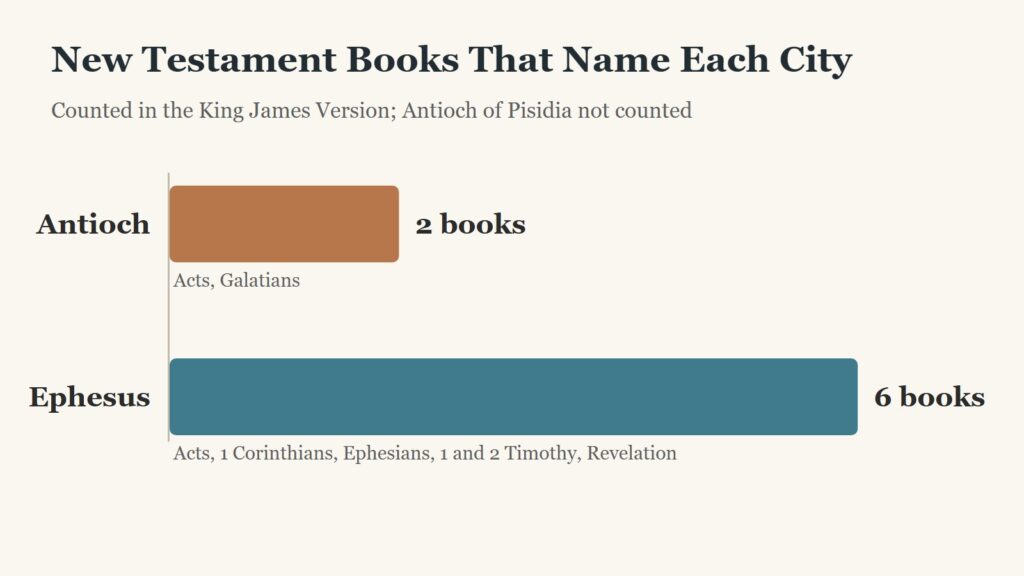
Ephesus has a letter to the Ephesians and the first letter of Revelation (Revelation 2:1-7), as I explain in the letter to the church of Ephesus, but there is no letter to Antioch. In the King James Version, Antioch on the Orontes is named in Acts and Galatians (I left out 2 Timothy 3:11, Antioch of Pisidia), Ephesus in six books, as in my Corinth vs Ephesus.
Bishops, Councils and the Early Church
The story goes on after Bible. Ignatius, bishop of Antioch, was taken to Rome under guard, and on the way he wrote letters to the churches of Asia, one of them to the Ephesians. You can read about him in Ignatius of Antioch and his letters.
Later each city led a big part of the church. Antioch became the seat of one of the great patriarchates, and the title is still used today. Ephesus was the leading church of Asia and hosted the Council of Ephesus in 431, which called Mary the Theotokos, the Mother of God. More in the Council of Ephesus of 431.
Visiting Ephesus and Antioch Today
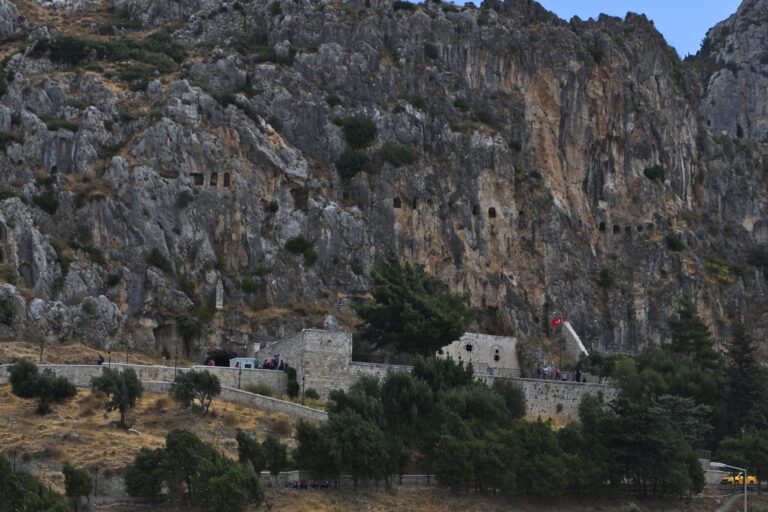
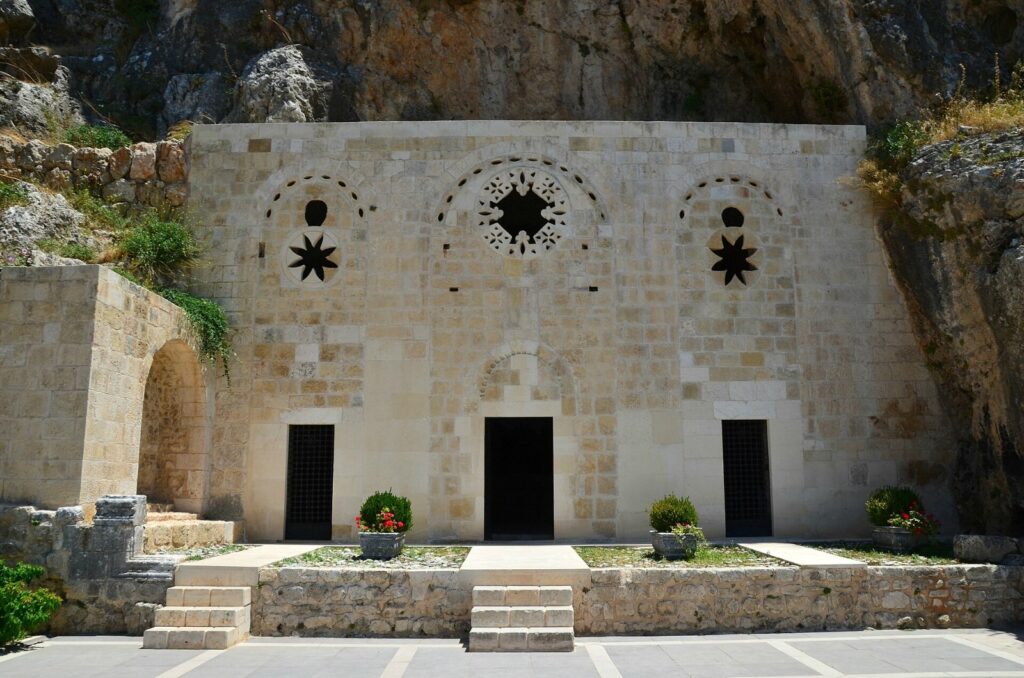
In Antakya the best-known Christian site is Saint Peter’s Cave Church, cut in the rock of the mountainside. Tradition links it with Peter and the first believers of Antioch. I wrote about it in the seven sacred caves of Christian Turkey. The Hatay Archaeology Museum keeps the city’s mosaics.
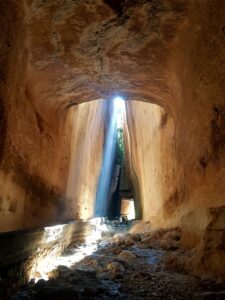
On the coast at Seleucia Pieria, Antioch’s old port, you can walk through the Vespasianus Titus Tunnel. The Romans cut it through the rock to turn floodwater away from the harbor. Vespasian ordered it, and the work went on under his son Titus and later emperors. The tunnel and Saint Peter’s Church are both on Turkey’s tentative list for UNESCO.
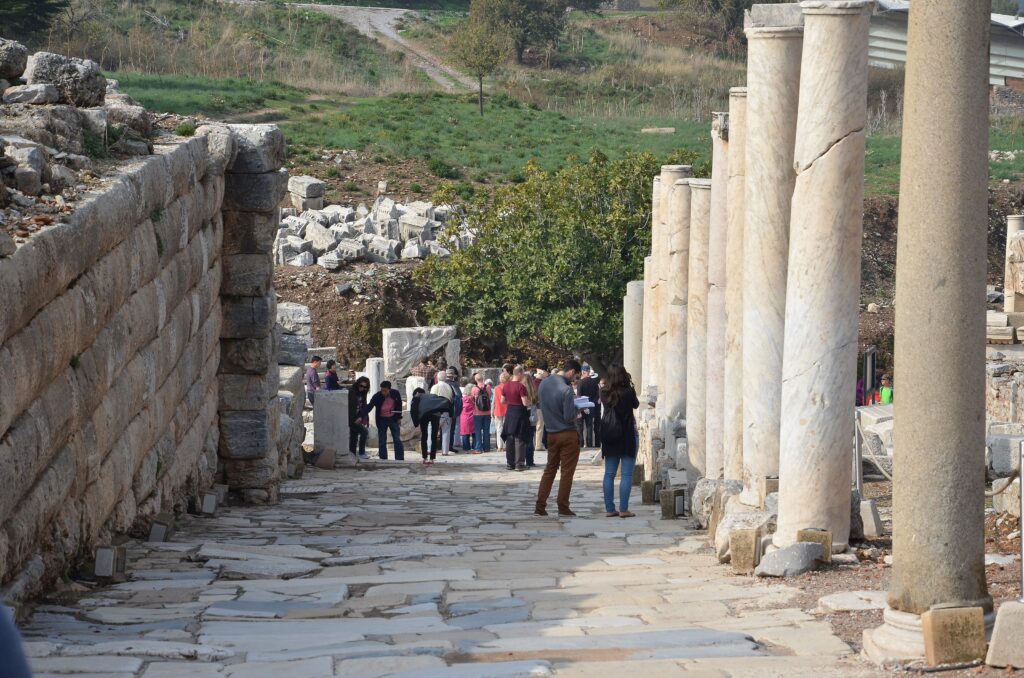
In Ephesus, most visits start at the Upper Gate and walk downhill on the marble streets, past Curetes Street to the Library of Celsus and the Great Theater. My article on the Upper Gate or Lower Gate of Ephesus explains the two entrances.
| Visiting today | Ephesus | Antioch |
|---|---|---|
| Nearest town | Selçuk | Antakya |
| Key Christian site | Church of Mary, Basilica of Saint John | Saint Peter’s Cave Church |
| Museum | Ephesus Museum, Selçuk | Hatay Archaeology Museum |
| Roman engineering | Marble streets, aqueducts | Vespasianus Titus Tunnel |
| How the visit flows | Downhill walk from the Upper Gate | Sites spread over the city and coast |
Both cities are in Turkey, but they are far apart: about 806 kilometers in a straight line, from the Aegean coast to the eastern end of the Mediterranean. Most travelers fly between the two regions, so you do not need days on the road. I hope you can give each city its own unhurried day.
Frequently Asked Questions
Is Antioch in Turkey?
Yes. The great Antioch of the Bible, Antioch on the Orontes, is today’s Antakya in Hatay Province, in the south of Turkey. Antioch of Pisidia, where Paul preached in Acts 13, is also in Turkey, near Yalvaç.
Where were believers first called Christians?
In Antioch on the Orontes. Acts 11:26 says “the disciples were called Christians first in Antioch”, after Barnabas and Saul had taught there a whole year.
How far is Antioch from Ephesus?
About 806 kilometers (about 500 miles) in a straight line. By road it is a long drive across Turkey, so most travelers fly between the two regions.
Hire Ephesus Tour Guide
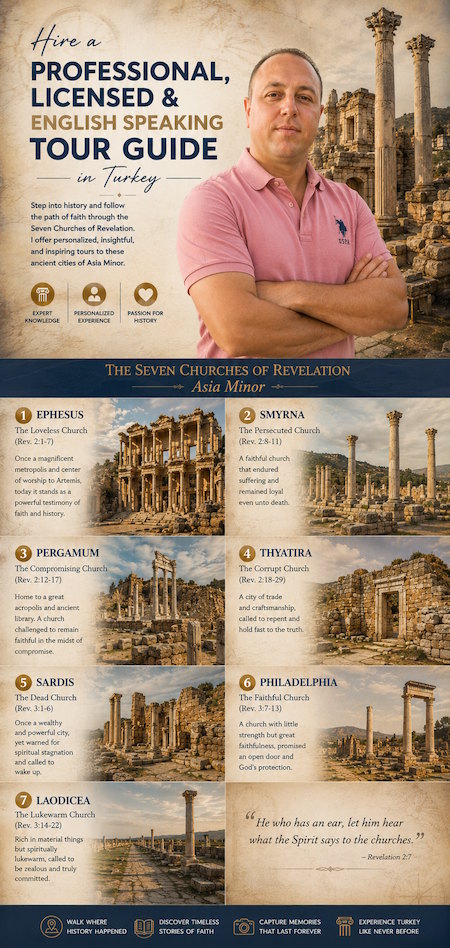
I am a nationally licensed Turkish tour guide based in Kuşadası, nearby Ephesus. My day guiding is in Ephesus, İzmir and Pamukkale. With my national license I can also guide in other regions of Turkey as your personal guide on a longer journey.
You can see my guiding rates and guiding areas, or write to me through my contact page to ask about my availability.
I hope we will walk the marble streets of Ephesus together one day and talk about the church of Antioch on the way. See you soon, Hasan Gülday.