During the excavations carried out in the necropolis from the Urartu period in the Gürpınar district of Van, the skeleton belonging to an Urartian woman buried with her jewelry was discovered.
Add Tours Around Turkey as a preferred source on Google
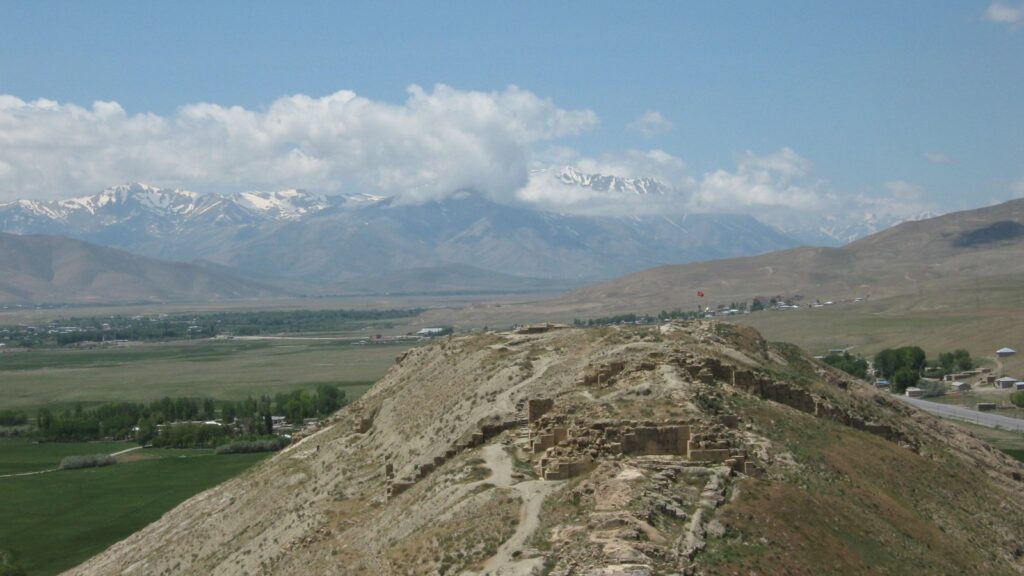
The Urartian women’s grave found in Van held a young noblewoman who was buried wearing her whole set of jewelry. The grave lies in a necropolis at Çavuştepe, an Urartian fortress in the Gürpınar district. The kingdom of Urartu ruled the Lake Van region from about the 9th to the 6th century BC.

Van Yüzüncü Yıl University’s head of archeology department Prof. Dr. Rafet Çavuşoğlu goes on the excavations with help of the expert academicians.
The studies carried out in the necropolis, which was discovered 3 years ago and where the ruling class in the Urartians were buried, revealed a female skeleton with pendulum earrings on both ears, a ring on her left hand, a necklace on her neck, a poppy-headed ornamental pin, and dragon-headed bracelets on both arms.

The cause of death and the exact age of the woman will be determined by examining the skeleton in the laboratory of the anthropologists in the team.
Jewelry Set On Urartian Women
Prof. Dr. Çavuşoğlu said that they gained the very important knowledge in the necropolis area where they started excavations in 2017. Çavuşoğlu stated that they once again understood the importance of jewelry in burial customs of Urartians this year, and gave the following information:

“The grave we finally unearthed belongs to a woman aged 20-25. The important thing here is that the woman was buried with all her jewelry. There is a complete jewelry set on the skeleton. It shows that the adornment traditions of Urartian women were very high. It is determined that the skeleton belongs to a noble woman. Because there is a bracelet on both arms, a bronze ring in her left hand, earrings with pendulums on both ears, an ornamental pin on the lower part of his neck and a necklace made of semi-precious stones. It is understood that she was buried with all the jewelry she had been using in her daily life. It is especially important that the beads in the necklace part were beautifully processed in a spherical style. “
“The most important incident here is that the burials are not from the standard people, but from the wives and families of the ruling class in the palace. Her ring on the left finger remains maybe this can be one of the oldest wedding ring examples ever discovered.”
Who Were the Urartians?
The Urartians ruled a kingdom around Lake Van from about the 9th to the 6th century BC. They were one of the many civilizations that lived in Anatolia. Their capital, Tushpa, stood where the Van Fortress is today, beside the lake, and they were known for fine bronze work and strong stone fortresses.
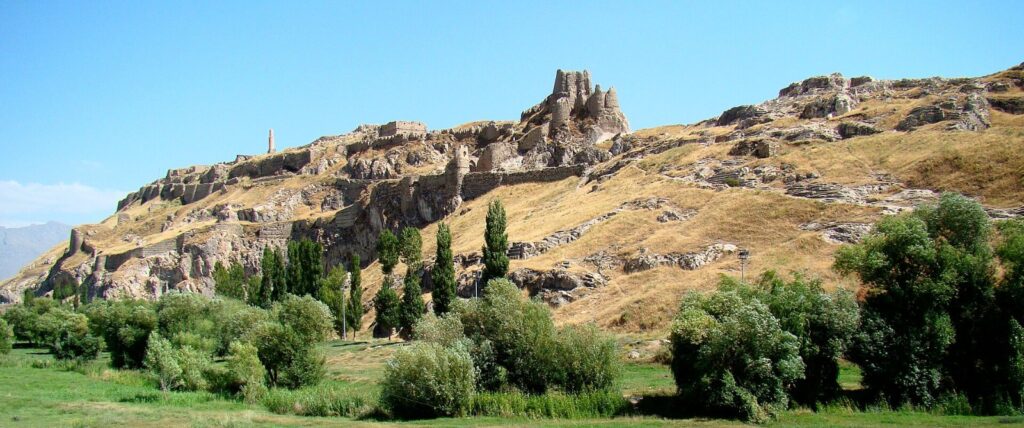
Çavuştepe was built by King Sarduri II in the 700s BC, about 25 kilometers southeast of Van. Its ruins include palace and the temple of the god Khaldi.
The name Urartu is the same name as Ararat in the Bible, where Noah’s ark came to rest (Genesis 8:4). Read more in my post on Mount Ararat. Excavations in Van also found a baby buried with a two-headed dragon bracelet, which is in my list of top archaeological discoveries of 2020.
Frequently Asked Questions
When did the kingdom of Urartu end?
Probably around 590 BC, at the hands of the Medes, although some historians date its end a little later in the 6th century BC. Wars with Assyria and attacks by Scythians and Cimmerians had already weakened it.
Did the Urartians have their own writing?
They used cuneiform, the wedge-shaped script of the Assyrians, to write their own language. Many royal inscriptions are carved on rock faces and stone slabs around Lake Van.

Learn More on Urartians
Urartians were one of the most significant civilizations lived in Turkey. Their settlements were focused on the southeastern part of Turkey. I would be pleased to share my knowledge on Urartians with you. You can contact me to book professional licensed tour guide for Urartian ruins in Turkey. See you soon, Hasan Gülday.